
What Is Drywall Compound?
Drywall Compound is a spreadable material used to fill joints, cover fastener marks, repair dents, and smooth drywall surfaces. It starts soft, then dries into a firm layer that can be sanded or textured. Painters and drywall finishers use it to create an even surface before applying primer and paint.
Quick Facts About Drywall Compound
Category
Wall repair and finishing material
Used for
Filling, smoothing, and texturing drywall
Common confusion
It is not primer or paint
Also called
Joint Compound, Drywall mud
Often discussed with
Drywall Texturing
Key Takeaways About Drywall Compound
- It dries firm and can be sanded or textured.
- Thin layers help create a smooth, even surface.
- Joint compound and drywall compound usually mean the same material.
How Drywall Compound Works
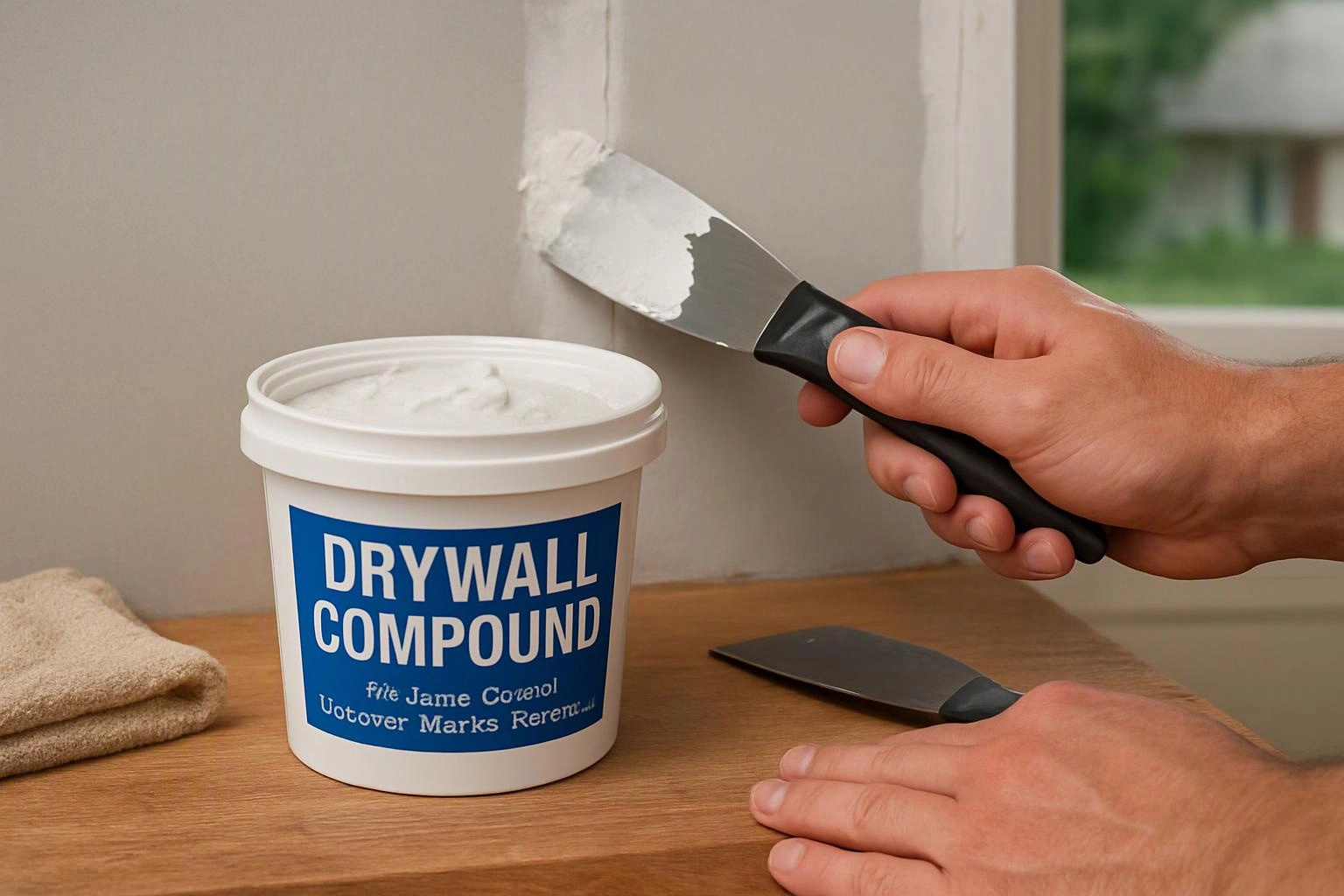
Drywall Compound spreads across drywall joints, screw marks, dents, and small surface gaps. The material stays workable during application, then dries as moisture leaves it. A smooth coat can be sanded, while a shaped coat can form part of a wall texture.
Related glossary terms: Drywall Primer, Texture Coat, Surface Preparation.
For drywall texturing, the compound is placed over a prepared surface and worked with a tool, brush, or roller. The application method controls the pattern and depth. Primer helps seal the finished surface before paint, so the texture absorbs paint more evenly.
Drywall Compound in Texturing
- Joint compound fills seams and repair areas.
- Texture coat creates a visible wall pattern.
- Sanding removes ridges and unwanted marks.
From the Thomas J. Painting team
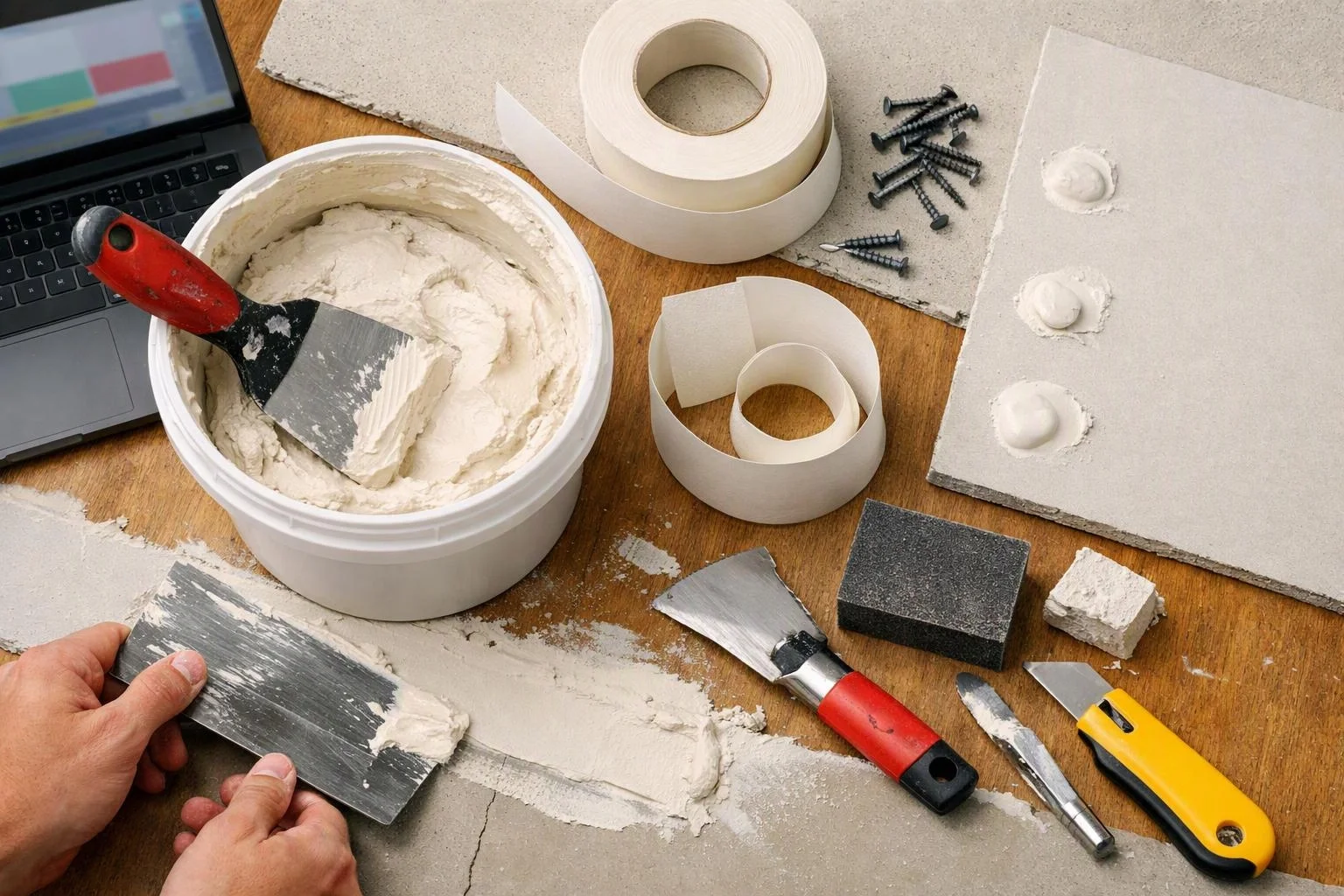
When we prepare a wall for texturing, we check the drywall compound for dry spots, ridges, and visible seams. We also look across the surface from different angles, because side lighting can reveal marks that normal room lighting hides.
Drywall Compound in Practice: A Real-World Example
A homeowner wants a textured finish after repairing a wall opening. We apply drywall compound over the repair, blend the texture into the surrounding area, and prepare the surface for primer and paint.
Related Services
Related Terms
Drywall Primer
Drywall Primer is a coating made for new or repaired gypsum board. It seals the paper…
Texture Coat
Texture coat is a textured finish applied over a prepared surface to create a raised, patterned…
Surface Preparation
Surface Preparation is the planned cleaning, repair, sanding, scraping, and priming of a surface before paint…
Sandpaper Grit
Sandpaper Grit is a measure of the abrasive particles on sanding paper. Lower grit feels rougher…
Thomas J. Painting
Have Questions About Drywall Compound?
Contact Thomas J. Painting for practical guidance on Drywall Compound and related painting contractor work in Bellevue.