
What Is Masking?
Masking is a painting preparation method that covers surfaces and objects before paint application. It uses tape, plastic, paper, or other barriers to keep paint away from areas that should remain unchanged. Painters mask trim, hardware, floors, windows, fixtures, and nearby equipment to create clean edges and reduce cleanup.
Quick Facts About Masking
Category
Painting preparation
Used for
Surface and object protection
Common confusion
Not a substitute for surface repair
Also called
Paint Masking, Protective masking
Often discussed with
Commercial Painting
Key Takeaways About Masking
- Masking creates a temporary barrier around areas that should not receive paint.
- Good masking follows surface edges without leaving gaps or loose sections.
- Masking is not the same as repairing damaged surfaces before painting.
How Masking Works
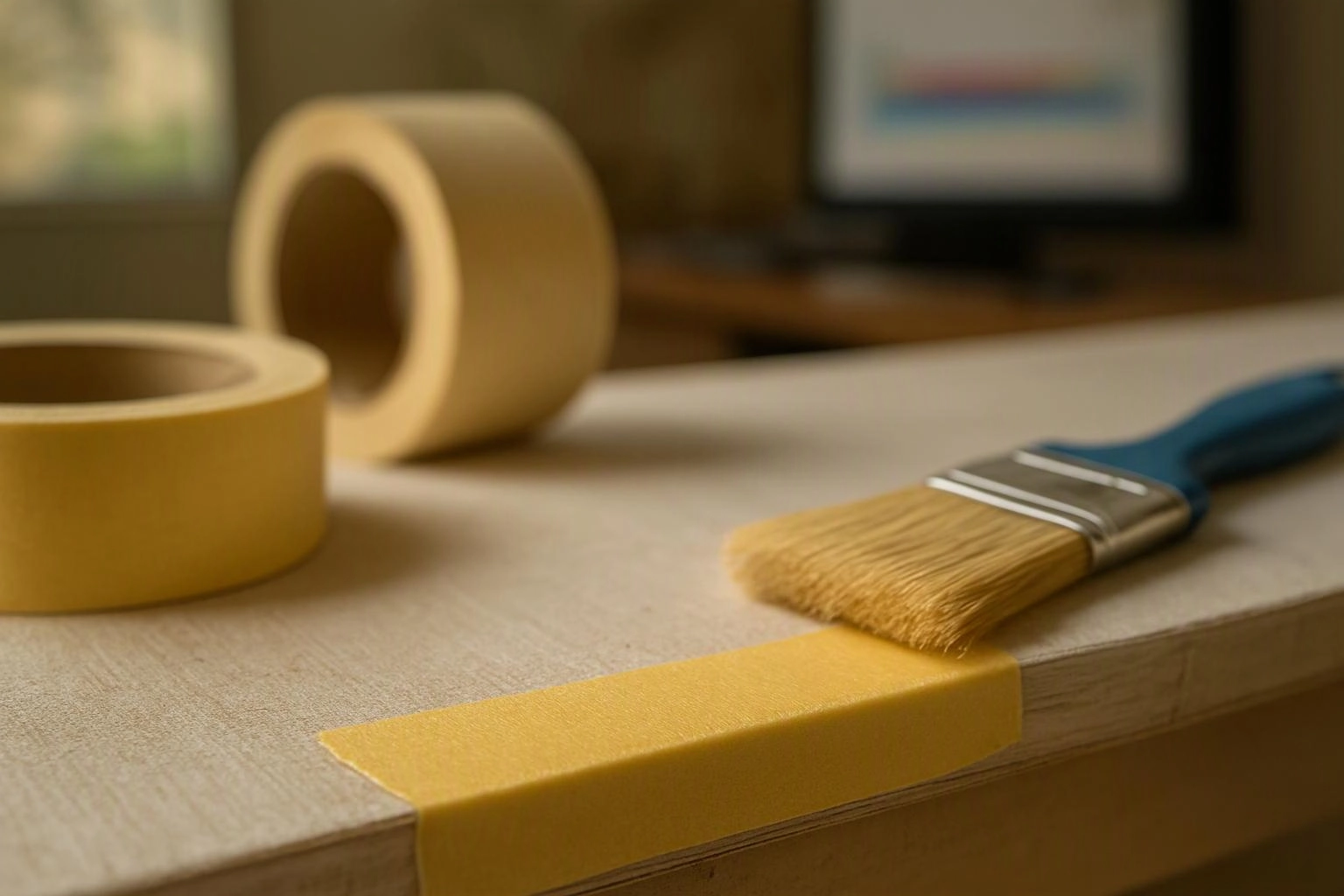
Masking places a temporary barrier between paint and protected areas. Painters press tape along an edge, then cover nearby surfaces with paper, plastic, or protective film. The barrier stays in place while the coating is rolled, brushed, or sprayed.
Related glossary terms: Surface Preparation, Paint Sprayer, Paint Sheen.
Surface condition affects how well masking holds. Dust, grease, moisture, and loose paint can keep tape from sticking. Painters also choose materials that fit the task. Paper may protect a narrow area, while plastic can cover larger equipment or furnishings.
Careful removal helps preserve the painted edge. Painters pull tape after the coating sets enough to hold its shape, but before the tape bonds too firmly. Masking protects surfaces, but it does not fix cracks, holes, stains, or failing paint.

Expert Note
When we mask commercial spaces, we identify surfaces that must stay clear before work begins. We check tape contact, cover nearby equipment, and inspect edges before applying paint. Our team removes masking carefully so fresh edges stay intact and protected surfaces remain clean.
Masking in Practice: A Real-World Example
For a commercial office repaint, painters can mask door hardware, glass panels, baseboards, and computer equipment before coating the walls. The barriers help keep spray or roller splatter away from areas that remain in service.
Related Services
Related Terms
Surface Preparation
Surface Preparation is the cleaning, repair, and conditioning of a surface before paint is applied. The…
Paint Sprayer
A paint sprayer is a powered tool that applies coating as a fine spray. The tool…
Paint Sheen
Paint Sheen is the level of gloss or reflection a dried paint film shows. Sheen affects…
Touch-Up
A touch-up is a small paint repair that covers marks, scuffs, chips, or thin spots on…
Painter-Bellevue-Wa.com
Have Questions About Masking?
Contact Painter-Bellevue-Wa.com for practical guidance on Masking and related painting contractor work in Bellevue.