
What Is Wood Stain?
Wood Stain is a colored finish that soaks into wood and changes its appearance while showing some of the grain. The finish can add color, help limit moisture absorption, and protect the surface when paired with proper preparation and maintenance. Wood stain may be transparent, semi-transparent, or more opaque.
Quick Facts About Wood Stain
Category
Colored wood finish
Used for
Fences, decks, and other wood surfaces
Common confusion
Stain is not the same as paint
Also called
Timber Stain
Often discussed with
Fence Staining, Deck Staining
Key Takeaways About Wood Stain
- Stain soaks into wood instead of forming only a surface film.
- Porous wood may absorb stain unevenly without proper preparation.
- Paint and stain are not interchangeable finishes.
How Wood Stain Works
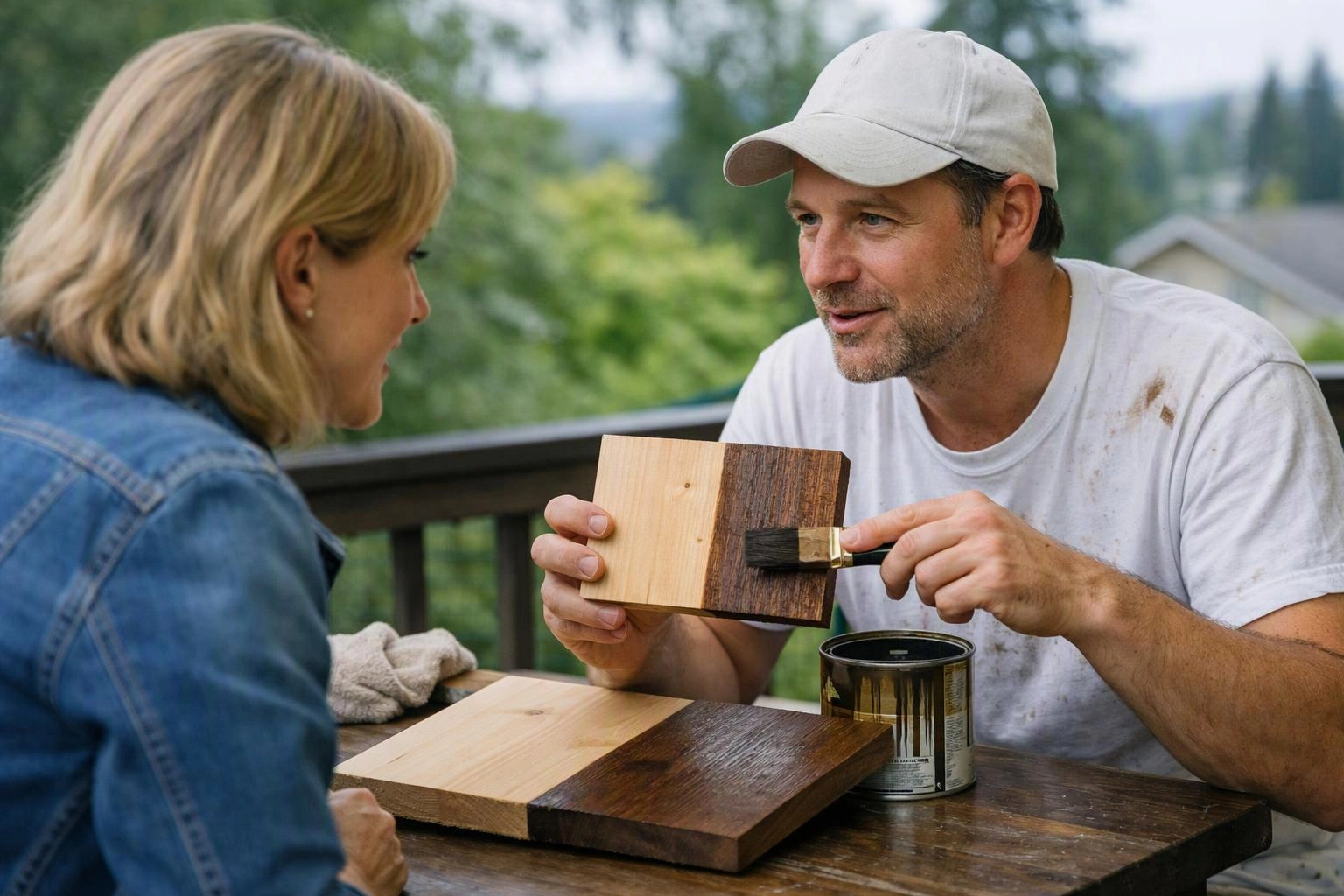
Wood stain works by entering the pores of prepared wood. The wood's porosity, grain, and surface condition affect how evenly the color spreads. A transparent stain shows more grain, while a more opaque stain hides more of the original color.
Related glossary terms: Surface Preparation, Fade Resistance.
On a fence, stain helps the boards look more uniform and can reduce direct exposure to moisture. The finish still needs a clean, sound surface. Dirt, loose fibers, and old peeling coatings can block absorption and create uneven areas.
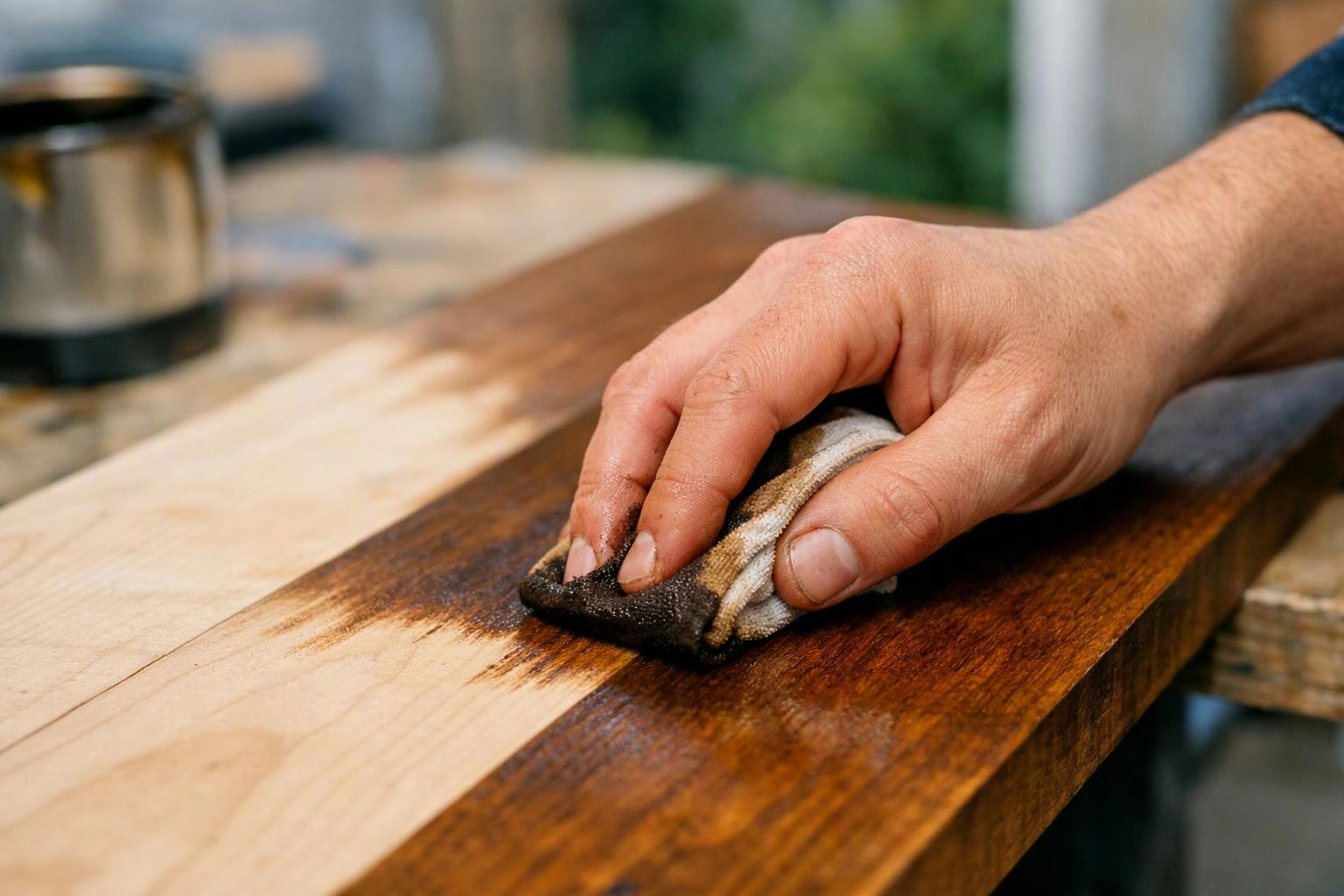
Surface preparation often includes cleaning and removing loose material. Applicators may use brushes, pads, or sprayers, depending on the fence design and the desired finish. A test area helps confirm the color before the full application.
From the Thomas J. Painting team
When we prepare a fence for stain, we check for loose coating, weathered fibers, and areas that may absorb color differently. We also review a small test area before covering the full surface. That check helps us spot color changes caused by wood condition, not just the stain itself.
Wood Stain in Practice: A Real-World Example
A cedar fence may receive a semi-transparent wood stain after cleaning and drying. The stain adds a consistent tone while allowing the cedar grain to remain visible.
Related Services
Related Terms
Surface Preparation
Surface Preparation is the planned cleaning, repair, sanding, scraping, and priming of a surface before paint…
Fade Resistance
Fade Resistance is a coating’s ability to keep its color when sunlight, weather, and outdoor exposure…
Thomas J. Painting
Have Questions About Wood Stain?
Contact Thomas J. Painting for practical guidance on Wood Stain and related painting contractor work in Bellevue.