What Peeling or Stained Ceiling Paint May Be Telling You
Peeling or stained ceiling paint often points to moisture, a leak, poor surface preparation, or trapped humidity. Thomas J. Painting checks the ceiling condition, identifies the likely cause, and prepares the surface before repainting.
Get a Free EstimateWhat peeling or stained ceiling paint can tell you
Peeling ceiling paint usually means moisture or weak paint adhesion needs attention before repainting. Thomas J. Painting looks for the cause before we plan the repair.
These signs can appear alone or together. We check the full area because a fresh finish won't last over an unresolved problem.
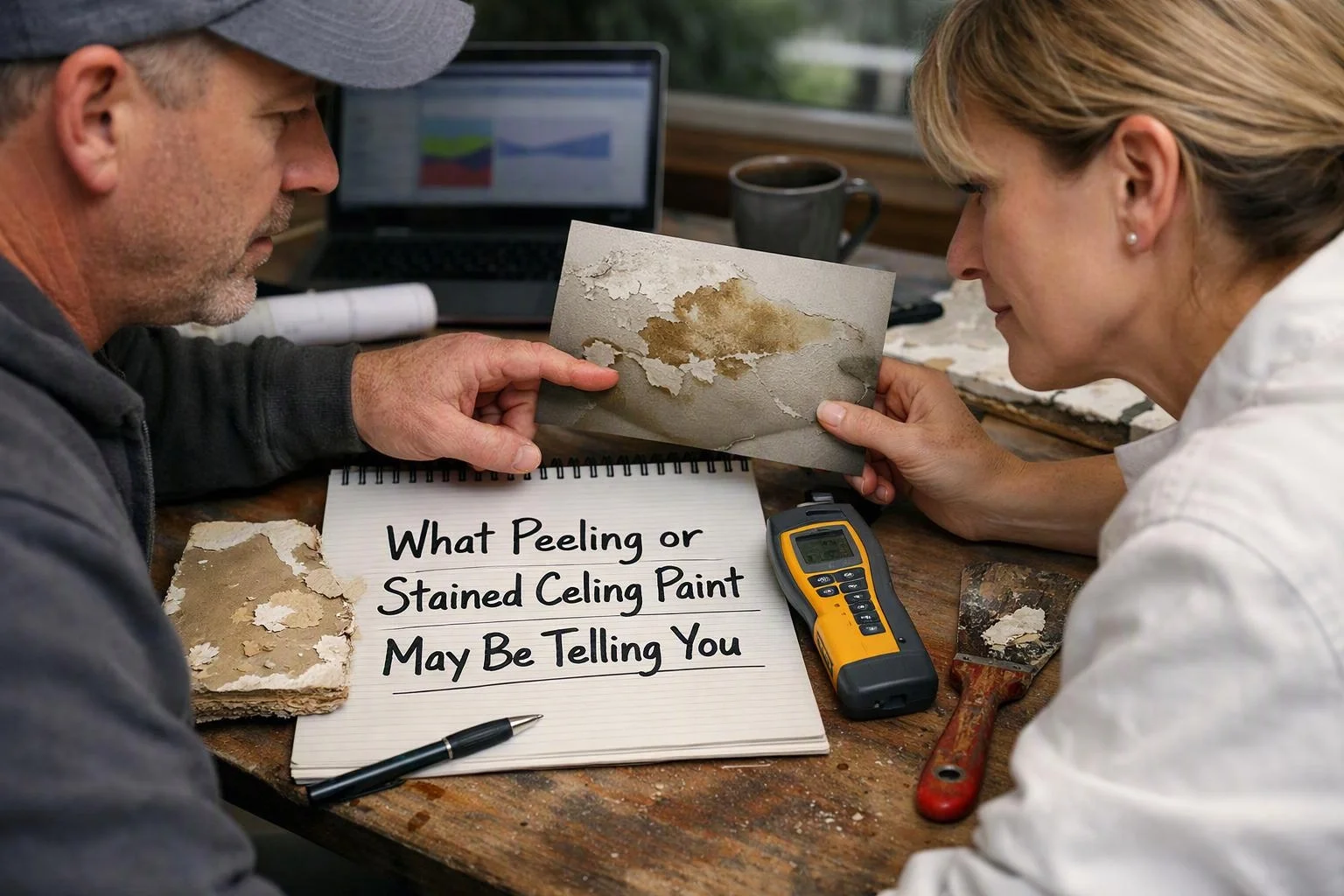
Why is my ceiling paint peeling?
Ceiling paint peels when moisture reaches the surface or when the paint cannot bond well. A water leak, roof leak, or plumbing leak can push moisture through ceiling drywall.
High humidity can also weaken a paint film over time. Bathrooms and rooms with poor airflow face more surface stress.
Poor surface preparation leaves dust, grease, loose paint, or an unstable layer beneath the new coating. Incompatible paint layers can also create poor adhesion. We remove unstable material and prepare the surface before applying new paint.
For broader planning, our Ceiling Painting service addresses preparation and finish work as one process.
What do brown or yellow ceiling stains mean?
Brown or yellow ceiling discoloration often shows that water has reached the paint or ceiling material. A brown ceiling stain may come from a roof leak, plumbing leak, or another moisture source.
A yellow ceiling stain can mark older water damage, but it can also return when a leak remains active. Mold or mildew may develop when damp material stays wet. We look for signs of moisture and surface damage before covering the mark.
Peeling around a stain makes the concern stronger because the paint layer may be losing its bond. The stain's shape and location can help guide the inspection, but they don't prove the leak source by themselves.
Can you paint a ceiling before fixing a leak?
No, painting should wait until the leak is fixed and the ceiling is dry.
An active leak can soak fresh paint and cause another paint failure. Water can also damage ceiling drywall behind the visible stain.
After the water source is corrected, we check the dry surface for loose material, staining, and needed surface repair. We then select a stain-blocking primer when the ceiling condition calls for it.
How we assess a ceiling before painting
We assess the stain, peeling areas, surface condition, and likely moisture source before recommending paint work. Our process focuses on the cause as well as the visible damage.
We inspect paint adhesion and look for loose or bubbling sections. We also check whether the ceiling drywall feels stable and suitable for coating.
Surface preparation may include removing loose paint, smoothing damaged areas, and completing needed repairs. A stain-blocking primer can help separate remaining discoloration from the finish coat.
Our team explains what the ceiling needs before we begin ceiling painting. That approach helps prevent a new finish from hiding a continuing problem.
What you can do yourself and when to call us
You can safely observe and document minor ceiling paint damage from the floor. The table shows where simple checks end and where our crew takes over.
Don't disturb wet drywall, active leaks, electrical fixtures, or large areas of loose paint. If ladder work feels unsafe, contact Thomas J. Painting so our crew can handle the ceiling work.
| Factor | What you can do yourself | What we do |
|---|---|---|
| Inspection | Look for spreading stains, bubbles, or loose paint from a safe position. | We assess paint adhesion, drywall condition, and the likely moisture source. |
| Cleaning | Use gentle cleaning only on a dry, stable surface. | We prepare the surface for primer and paint without coating unstable material. |
| Loose paint | Avoid pulling or scraping paint above your head. | We remove failed paint and complete the needed surface repair. |
| Ladder safety | Keep both feet on the floor if the ceiling cannot be viewed safely. | Our crew manages access and ceiling painting work. |
Water, plumbing, roofing, and electrical problems need the right trade to correct them. We can coordinate the paint preparation after the water source is addressed.
What our ceiling painting quote covers
Our quote considers the affected area, surface damage, preparation needed, primer choice, and finish work. We review the ceiling condition so the scope matches the actual repair.
Depending on the surface, the work may include ceiling paint removal, surface repairs, primer, and paint application. We also account for room protection during preparation and finishing.
Free Consultations help us discuss the stain, peeling areas, and likely work before you decide how to proceed. Request a quote through our contact page.
How to prevent peeling and stained ceiling paint
Small maintenance steps can help you notice moisture before paint damage spreads. We recommend watching the ceiling whenever a room has repeated humidity or leak concerns.
Ventilation can reduce humidity, but it won't correct a hidden water source. We can assess paint damage after the underlying issue is resolved.
When ceiling paint damage needs prompt attention
Ceiling paint damage needs prompt attention when water is active, the drywall feels soft, or the ceiling begins to sag.
Active dripping, a spreading stain, or water near electrical fixtures can create added safety concerns. Keep clear of damaged areas and arrange the right repair before painting.
Soft drywall and sagging can indicate deeper water damage. We assess the paint and ceiling surface after the water source has been handled, then recommend the needed preparation.
Questions About Peeling and Stained Ceiling Paint
Are brown ceiling stains always caused by a roof leak?
Thomas J. Painting knows brown ceiling stains can come from roof leaks, plumbing leaks, condensation, or other moisture sources. We inspect the stain and surrounding surface, but the water source may need correction before painting begins.
Why does ceiling paint bubble after painting?
Ceiling paint can bubble when moisture, trapped air, or poor paint adhesion pushes against the new coating. We check the dry surface and remove failed material before applying primer and finish paint.
Should loose ceiling paint be removed before repainting?
Yes, loose ceiling paint should be removed before repainting because unstable material can cause new paint failure. We prepare the surface, repair damaged areas, and use primer when the ceiling needs it.
What should I do if a ceiling stain keeps spreading?
A spreading ceiling stain needs attention because an active leak or continuing moisture source may be present. Keep away from soft or sagging areas, address the water source, and contact us for surface assessment before repainting.
Get help with peeling or stained ceiling paint
Thomas J. Painting checks the ceiling condition, prepares the surface, and explains the work needed for a lasting finish. Contact us to arrange a Free Consultations.
Contact Thomas J. Painting about your ceiling painting needs.
Get a Free Estimate