What Peeling Paint on Brick Can Signal
Peeling paint on brick can signal trapped moisture, surface damage, poor preparation, or coating failure. Thomas J. Painting checks the brick, mortar, stains, and moisture clues before recommending repainting. Free Consultations are available for reviewing the project.
Get a Free EstimateWhat Does Peeling Paint on Brick Signal?
Peeling paint on brick often signals moisture movement, weak adhesion, surface damage, or an unsuitable coating. Painted brick can hide problems in the brick face and mortar joints.
We look for the cause before planning new exterior paint. Poor surface preparation can leave a loose coating behind, while water intrusion can push paint away from brick masonry. Our team connects the visible paint failure to the condition beneath it.
Brick painting works best when the masonry is sound, dry, and ready for a compatible coating system. You can learn more about our Brick Painting process before requesting an assessment.
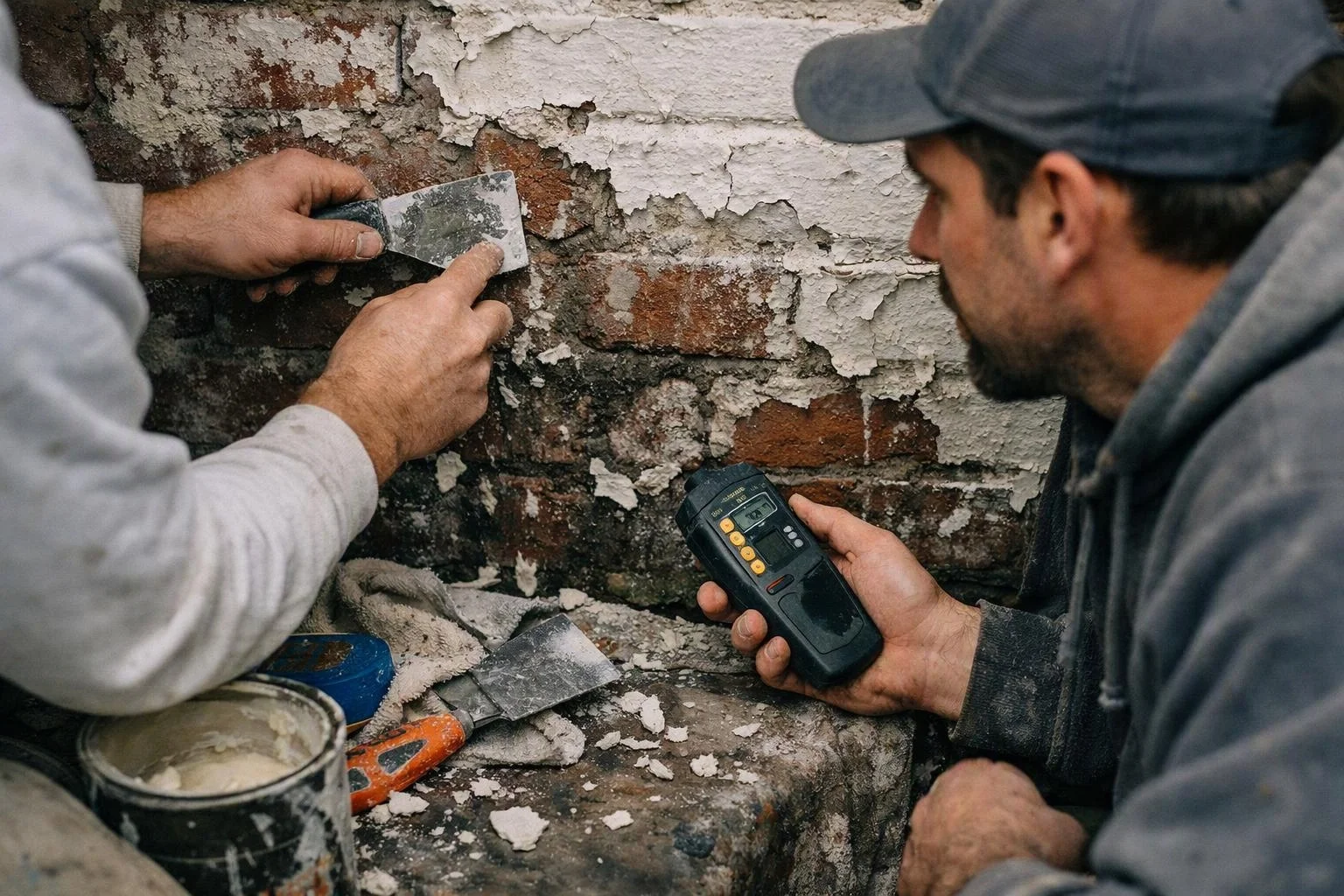
Warning Signs to Check Before Repainting Brick
Visible changes in the coating can point to deeper masonry or moisture concerns. Check the wall from a safe position, and avoid climbing if the area is hard to reach.
Our crew uses these signs to decide whether cleaning, repair, drying, or further assessment comes first.
How Moisture Makes Exterior Paint Peel
Yes, moisture can make exterior paint peel when water enters brick or mortar and pushes against the coating.
Brick pores and mortar joints can absorb rain, then release water through vapor movement. Paint may blister or peel when the coating blocks that movement or when water intrusion continues.
Rain exposure, poor drainage, and nearby leaks can keep the masonry damp. We trace visible stains and moisture clues before selecting surface preparation and exterior repainting methods.
What We Check Before Repainting Painted Brick
Our team checks the brick condition, mortar condition, paint layers, and surface adhesion before recommending a new coating.
We inspect for moisture clues, stains, cracks, and areas where the brick feels weak or damaged. These findings help us separate a surface coating problem from a larger masonry issue.
We then define the needed surface preparation. That plan may include loose paint removal, cleaning, drying time, masonry repairs, primer, or a compatible exterior paint system.
When Should Damaged or Stained Masonry Be Assessed?
Damaged or stained masonry should be assessed before repainting when peeling repeats, moisture signs remain, or brick and mortar appear damaged.
Repeated peeling can mean the moisture source has not been addressed. Stained brick, cracked mortar, and soft areas can also reduce paint adhesion.
We assess the wall before calling it ready for repainting. If the masonry needs repair or more drying, our scope reflects that condition.
DIY Checks vs Calling Thomas J. Painting
Homeowners can observe many surface clues from the ground and note where peeling or staining appears. Masonry preparation and moisture assessment require a closer review when damage or unsafe access is involved.
The comparison below shows where a basic inspection ends and our work begins.
| Factor | What you can do yourself | What we do |
|---|---|---|
| Homeowner inspection | Look for peeling, stains, white residue, and visible cracks from a safe location. | Review the brick, mortar, coating layers, and signs that need closer assessment. |
| Surface cleaning | Remove loose dirt where safe and practical. | Plan cleaning that suits the brick and removes surface contaminants without careless damage. |
| Loose paint | Note areas that flake or lift. Avoid disturbing damaged surfaces at height. | Remove failing coating as part of the planned surface preparation. |
| Ladder safety | Stay on the ground if the wall is high, uneven, or difficult to reach. | Handle elevated areas and access needs as part of our work plan. |
| Moisture assessment | Record stains, musty odors, and areas where peeling returns. | Trace moisture clues and identify conditions that could affect paint adhesion. |
| Masonry preparation | Avoid filling or coating damaged brick before its condition is understood. | Coordinate cleaning, repairs, drying, primer, and coating selection. |
| Brick painting | Gather photos and describe the problem when requesting an assessment. | Build a project scope for repainting brick after the surface is ready. |
How We Prepare Brick for a New Paint Coating
We prepare brick by assessing the surface, removing loose paint, cleaning the masonry, and confirming that it is dry.
Our crew addresses needed masonry repairs before applying a primer or exterior paint. The coating system must match the brick, mortar, exposure, and surface condition.
Good preparation supports stronger paint adhesion and helps reveal problems that paint alone cannot solve. We keep the work plan focused on the actual cause of the failing coating.
What Changes the Cost of Repainting Peeling Brick?
The cost of repainting peeling brick depends on preparation, masonry condition, moisture problems, access, and the coating system.
Brick surface area affects the amount of cleaning and coating work. Paint removal, masonry repairs, and the moisture source can add preparation needs.
Our project quote reflects access, surface preparation, repairs, primer, and the selected exterior coating system. We explain the scope clearly so you can see what the quote includes.
Plan Your Brick Painting Project
Brick painting should begin with a surface assessment and a clear project scope.
We review the peeling paint, moisture clues, brick masonry, mortar joints, and preparation needs before recommending repainting. That process helps prevent a new coating from covering an unresolved problem.
Thomas J. Painting offers Free Consultations for discussing your painted brick concerns and requesting a quote.
Request a brick painting consultationQuestions About Peeling Paint on Brick
Can you paint over peeling paint on brick?
Thomas J. Painting doesn't paint over failing coating without checking the brick, moisture clues, and surface adhesion first. Our crew removes loose paint and prepares the masonry before selecting a new coating.
Why does paint bubble on brick walls?
Paint bubbles on brick walls when moisture or weak adhesion creates pressure beneath the paint film. We check for water intrusion, trapped moisture, poor preparation, and coating failure.
What is the white powder on painted brick?
White powder on painted brick is often efflorescence, a residue left when moisture moves through masonry and carries salts to the surface. We treat the residue as a moisture clue and assess the wall before repainting.
Can brick be repainted after water damage?
Yes, brick can be repainted after water damage when the moisture source is addressed and the masonry is sound and dry. We assess stains, cracks, mortar, brick condition, and paint adhesion before planning the coating.
How can you tell if peeling paint comes from moisture?
Peeling paint may come from moisture when bubbling, water stains, efflorescence, musty odors, or repeated failure appear together. We compare those clues with the brick, mortar joints, drainage, and paint layers.