
What Is Chalking?
Chalking is the release of fine, powdery pigment from an exterior paint or coating as weathering breaks down its surface binder. The residue may appear on siding, trim, or other painted surfaces. Light chalking can affect color and adhesion, while heavy chalking may require cleaning and surface preparation before new paint is applied.
Quick Facts About Chalking
Category
Exterior paint surface condition
Used for
Assessing siding before repainting
Common confusion
Often mistaken for dirt or peeling paint
Also called
Chalky Surface, Paint chalking
Often discussed with
Siding Painting
Key Takeaways About Chalking
- Chalking feels dusty or powdery when you rub the painted surface.
- Heavy residue can weaken adhesion for a new siding paint coat.
- Chalking is not the same as peeling, bubbling, or flaking paint.
How Chalking Works
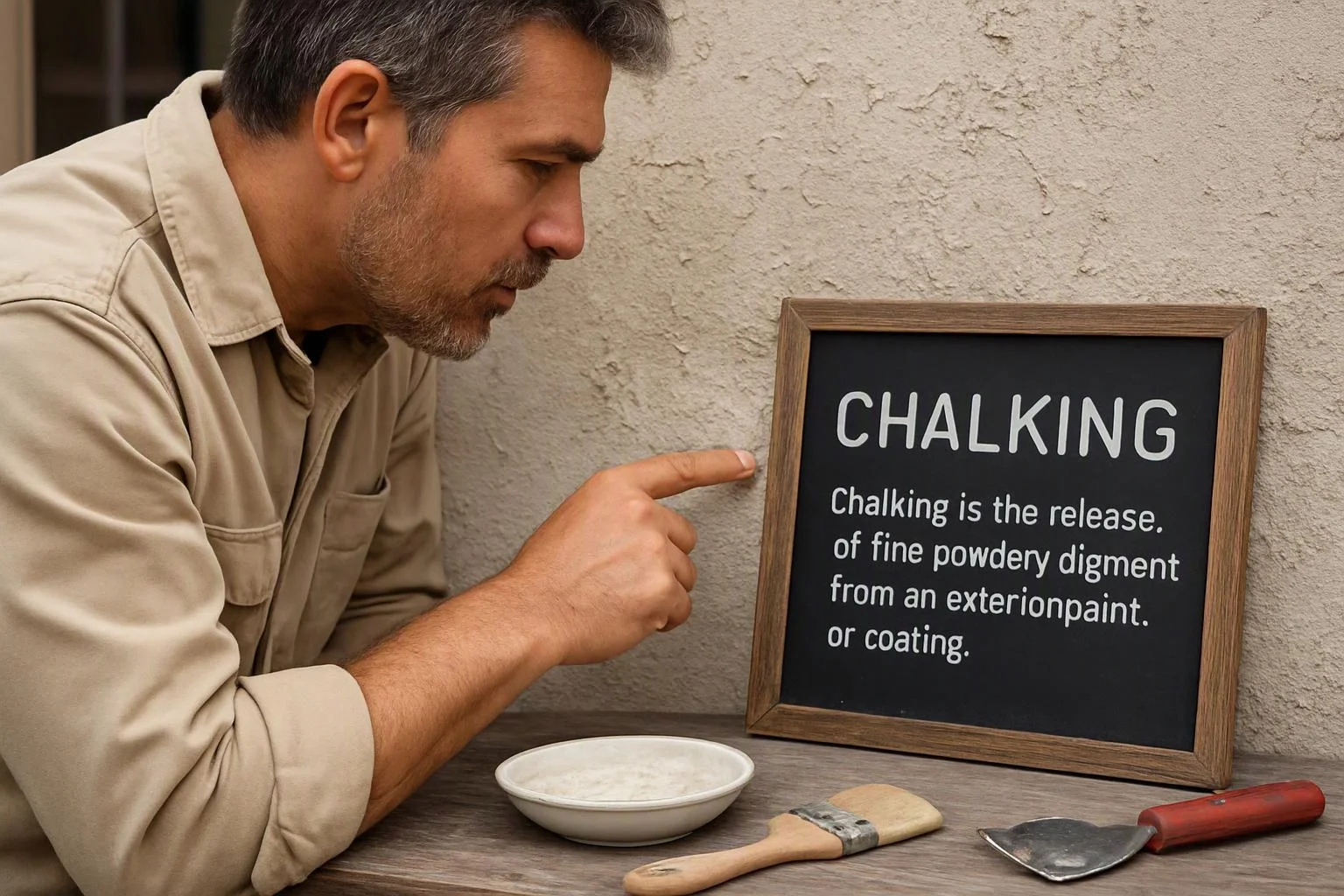
Chalking starts when sunlight, moisture, and weather break down the binder that holds paint pigment together. The pigment then loosens at the surface and leaves a dusty film. A simple hand wipe can reveal residue, but the amount and color of the powder can vary.
Related glossary terms: Paint Adhesion, Surface Preparation, Pressure Washing.
On painted siding, loose chalk must be removed before recoating. Cleaning may involve water, a suitable cleaner, and light surface work. The surface must then dry and receive any needed primer. The right preparation depends on the coating condition, the siding material, and the amount of residue.
Paint adhesion describes how well the new coating bonds to the prepared surface. Chalking affects that bond when loose pigment remains between the siding and fresh paint.
From the Thomas J. Painting team
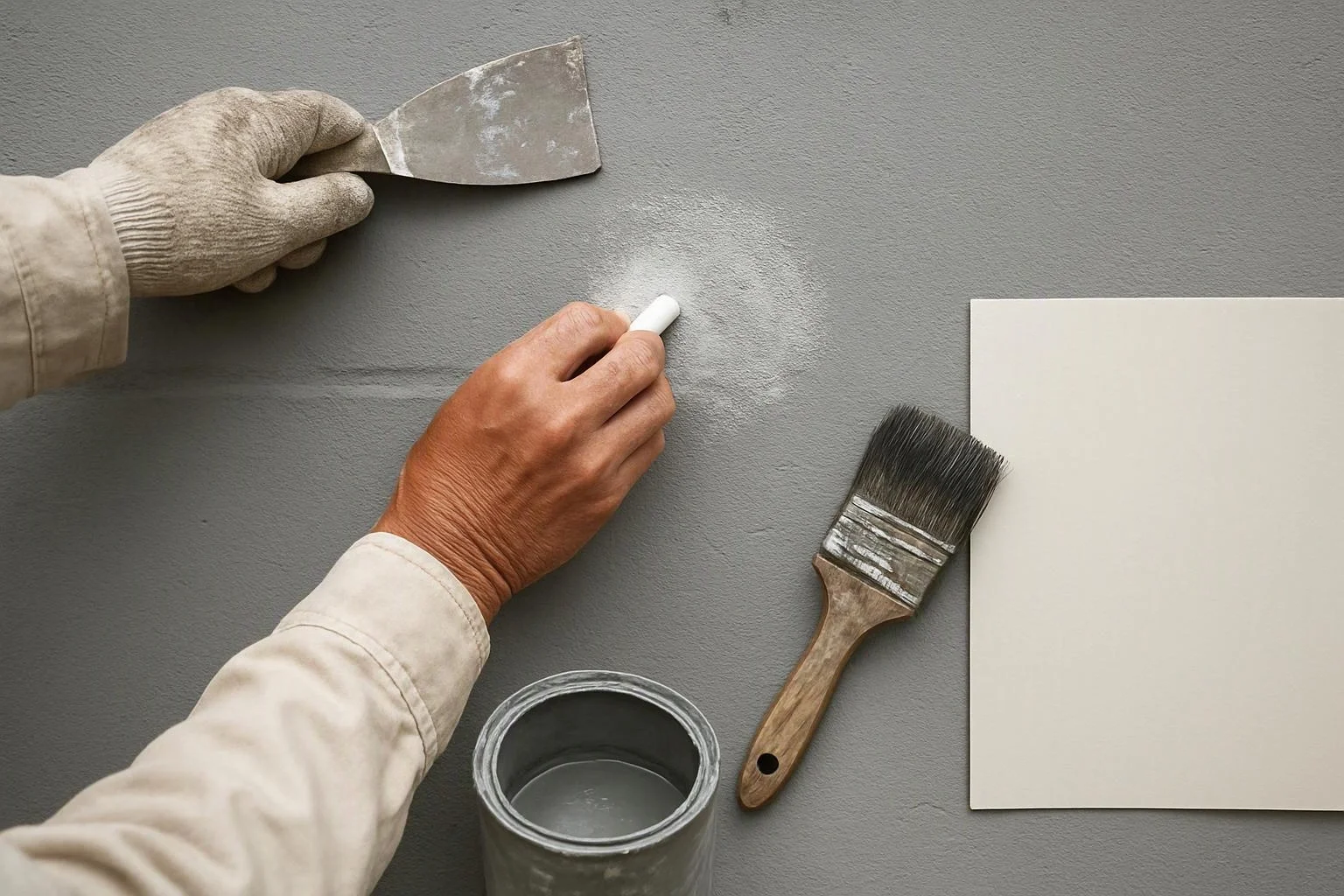
When we inspect siding, we wipe several areas to check for loose pigment and note how much residue transfers. We then match the cleaning and primer plan to the surface condition. Our team also checks for peeling or weak areas that need separate preparation before painting.
Chalking in Practice: A Real-World Example
A homeowner wants to repaint faded fiber-cement siding, but a white film transfers to a hand. The siding needs cleaning and suitable preparation before the new coating is applied.
Related Services
Related Terms
Paint Adhesion
Paint Adhesion is the bond that holds a paint film to its surface. Strong adhesion helps…
Surface Preparation
Surface Preparation is the planned cleaning, repair, sanding, scraping, and priming of a surface before paint…
Pressure Washing
Pressure Washing is a surface-cleaning method that directs pressurized water at dirt, grime, mildew, and loose…
Bonding Primer
Bonding Primer is a specialty coating that helps paint stick to smooth, glossy, or difficult surfaces…
Thomas J. Painting
Have Questions About Chalking?
Contact Thomas J. Painting for practical guidance on Chalking and related painting contractor work in Bellevue.