
What Is an Elastomeric Coating?
An Elastomeric Coating is a flexible exterior coating that expands and contracts with a building surface. It forms a thick, water-resistant film over materials such as siding, stucco, and masonry. The coating can bridge small surface cracks, but it cannot repair major damage or replace proper surface preparation.
Quick Facts About Elastomeric Coating
Category
Flexible exterior coating
Used for
Siding, stucco, and masonry
Common confusion
It does not fix major surface damage
Also called
Elastomeric Paint, Flexible exterior coating
Often discussed with
Siding Painting
Key Takeaways About Elastomeric Coating
- Its flexible film moves with minor surface expansion and contraction.
- Clean, sound siding gives the coating a better bond.
- Elastomeric coating is not a structural crack repair.
How Elastomeric Coating Works
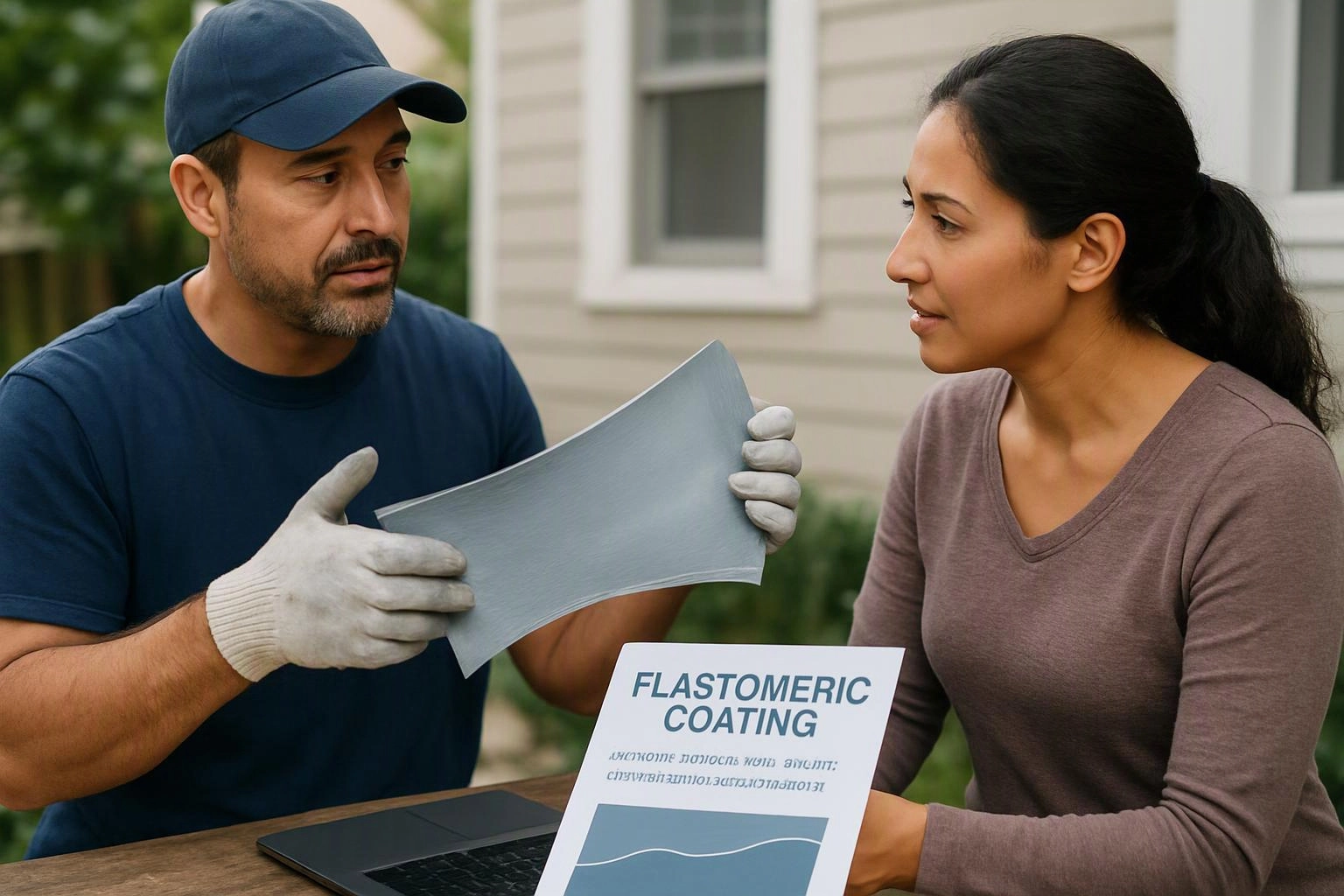
Elastomeric coating forms a flexible film that moves as the surface beneath it expands and contracts. This movement helps the film stay intact across small cracks and minor changes in siding. The coating also helps limit water entry through small surface openings.
Related glossary terms: Film Thickness, Paint Adhesion, Surface Preparation.
Surface preparation controls how well the coating performs. Siding must be clean, dry, and firmly attached before application. Loose paint, dirt, mildew, and damaged areas can weaken the bond. The coating is applied with tools suited to the siding texture, and the finish is checked for even coverage.
Film thickness affects the coating's ability to bridge small cracks and resist wear. A thin or uneven application may not provide the same protection. Major cracks, rot, or loose siding need separate repairs before coating work begins.
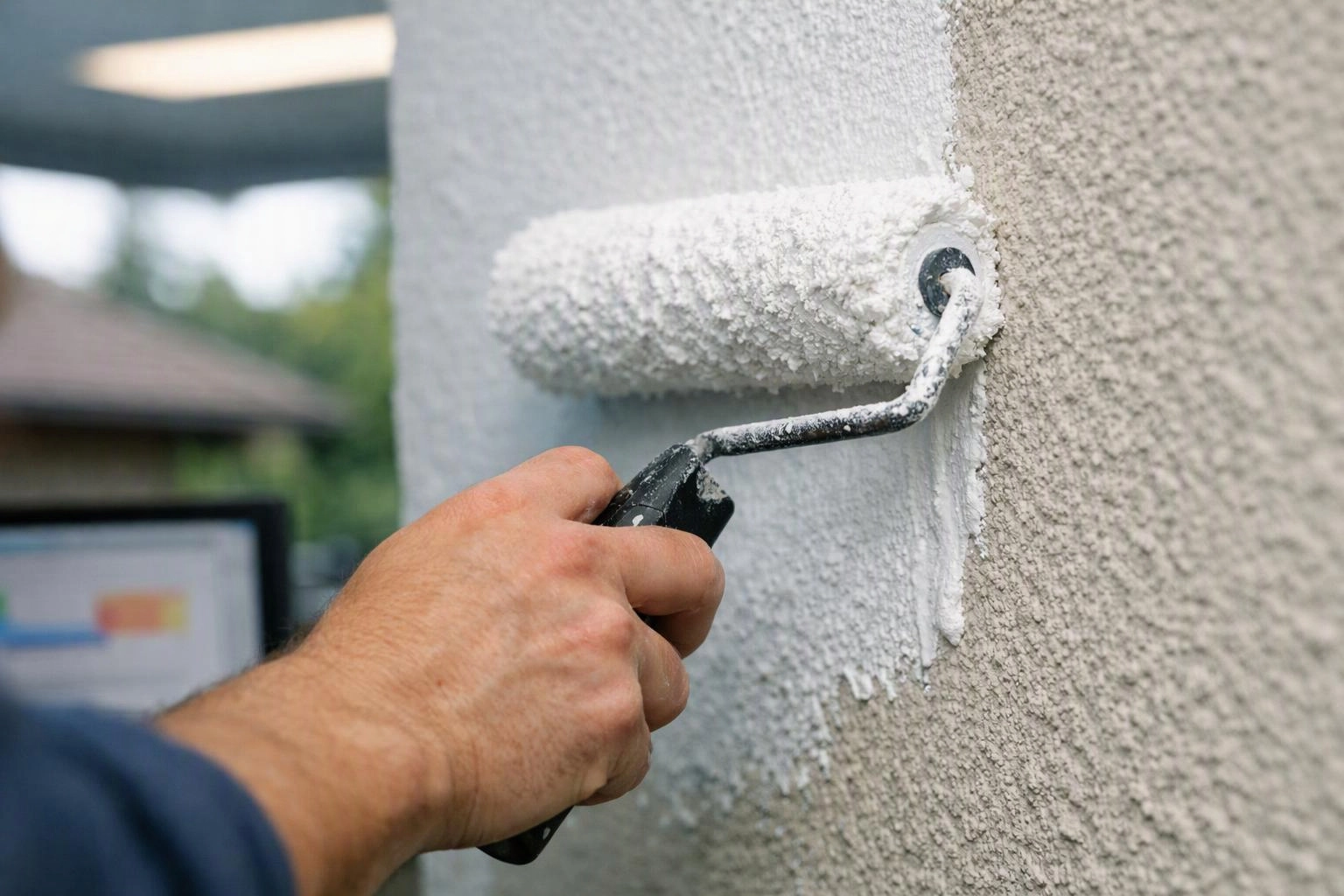
From the Thomas J. Painting team
When we use Elastomeric Coating for siding painting, we check the surface for loose paint, cracks, dirt, and moisture. We address surface problems before coating, then inspect the finish for even coverage and a sound bond.
Elastomeric Coating in Practice: A Real-World Example
A home with aging fiber-cement siding may have small surface cracks and worn paint. Elastomeric Coating can provide a flexible new film after the siding is cleaned, repaired, and properly prepared.
Related Services
Related Terms
Film Thickness
Film thickness is the depth of a coating after application or drying. Painters use it to…
Paint Adhesion
Paint Adhesion is the bond that holds a paint film to its surface. Strong adhesion helps…
Surface Preparation
Surface Preparation is the planned cleaning, repair, sanding, scraping, and priming of a surface before paint…
Peeling Paint
Peeling paint is a surface-coating failure where paint lifts, cracks, or separates from the material below…
Thomas J. Painting
Have Questions About Elastomeric Coating?
Contact Thomas J. Painting for practical guidance on Elastomeric Coating and related painting contractor work in Bellevue.