
What Is Film Thickness?
Film thickness is the depth of a coating after application or drying. Painters use it to check whether a coating covers the surface as designed. The measurement may describe wet film thickness during application or dry film thickness after curing. Each value helps guide coverage, performance, and compliance checks.
Quick Facts About Film Thickness
Category
Coating measurement
Used for
Checking applied coating depth
Common confusion
Thickness differs from coverage rate
Also called
Coating Thickness, Wet film thickness
Often discussed with
Commercial cool-roof compliance coating application
Key Takeaways About Film Thickness
- Wet and dry film thickness describe different coating states.
- Application tools and coating flow affect the final layer.
- Film thickness is not the same as coverage rate.
How Film Thickness Works
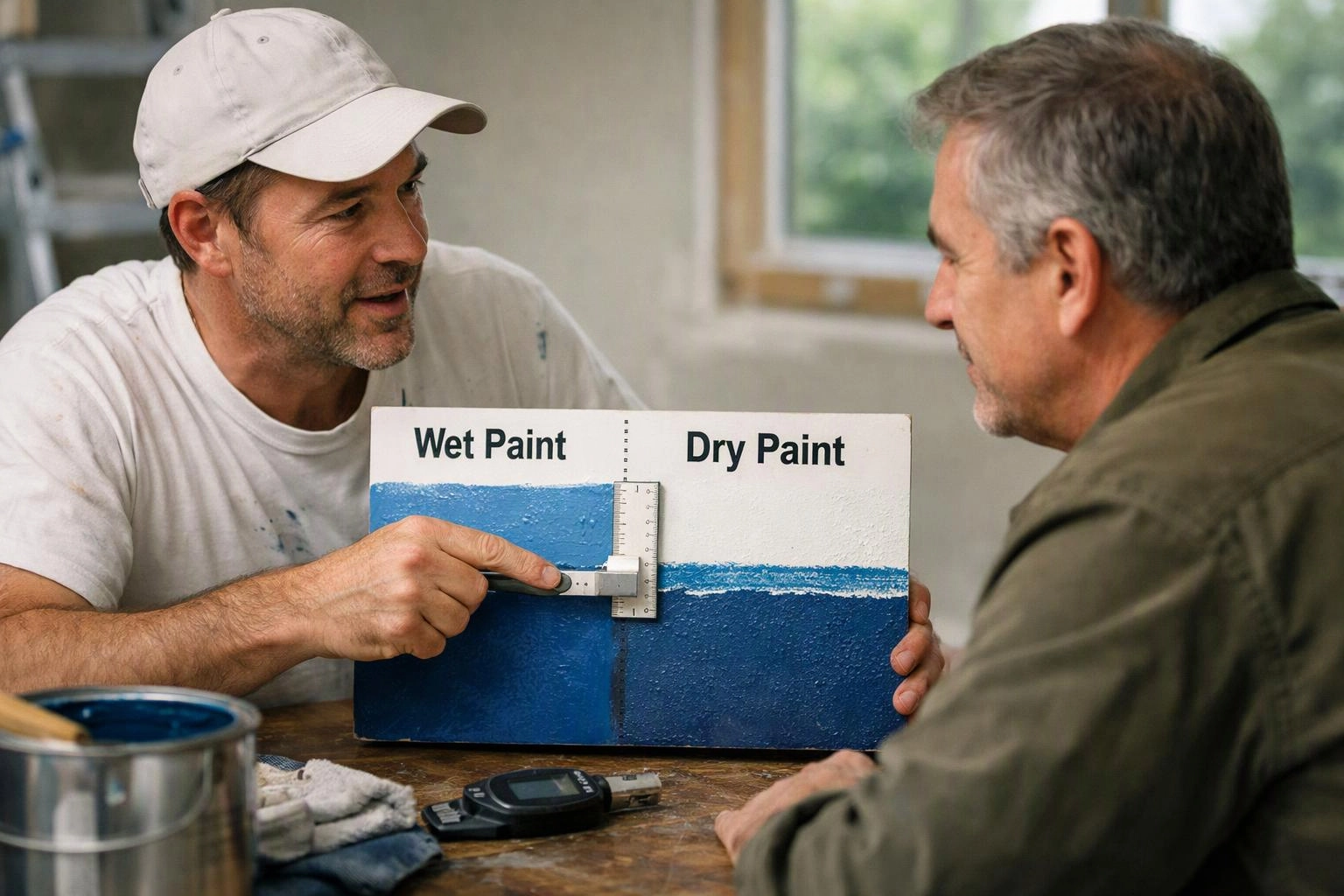
Film thickness describes the coating layer on a surface. Wet film thickness is checked while the coating is still fresh. Dry film thickness is checked after the coating has cured. These readings describe different points in the coating process.
Related glossary terms: Coverage Rate, Elastomeric Coating, Recoat Window.
Coating thickness depends on how much material reaches the surface and how evenly it spreads. A wet-film gauge can check fresh coating during application. A dry-film gauge can check the cured layer on suitable surfaces. The reading helps show whether the coating has a consistent layer across the work area.
Coverage rate describes how much surface area a coating can cover. Film thickness describes the depth left on that surface. Both terms help painters plan and review coating work, but they answer different questions.
From the Thomas J. Painting team
When we apply a commercial cool-roof compliance coating, we check the coating layer during the work and after it cures. Our team watches for thin areas, heavy buildup, and uneven spread. Surface texture, coating flow, and application method can all affect the final reading.
Film Thickness in Practice: A Real-World Example
On a commercial roof, the coating may look even while fresh but still have thin areas around seams or rough texture. The crew checks those areas and adds coating where the application plan calls for a consistent layer.
Related Services
Related Terms
Coverage Rate
Coverage Rate is the area a paint or coating can cover with a set amount of…
Elastomeric Coating
An Elastomeric Coating is a flexible exterior coating that expands and contracts with a building surface…
Recoat Window
A recoat window is the period when a coating is ready to receive another coat. The…
Paint Adhesion
Paint Adhesion is the bond that holds a paint film to its surface. Strong adhesion helps…
Thomas J. Painting
Have Questions About Film Thickness?
Contact Thomas J. Painting for practical guidance on Film Thickness and related painting contractor work in Bellevue.