
What Are Lap Marks?
Lap Marks are visible bands or color changes that form when a stain or coating dries across overlapping brush or roller sections. The marks show where one wet section meets another. On a deck, lap marks often appear when the coating begins drying before the applicator blends the next section into the wet edge.
Quick Facts About Lap Marks
Category
Application defect
Used for
Deck stain inspection
Common confusion
Brush marks
Also called
Overlap Marks, Overlap lines
Often discussed with
Deck Staining
Key Takeaways About Lap Marks
- They appear as bands, lines, or darker overlap areas.
- A wet edge helps keep deck stain color even.
- Lap marks are not the same as brush marks.
How Lap Marks Works
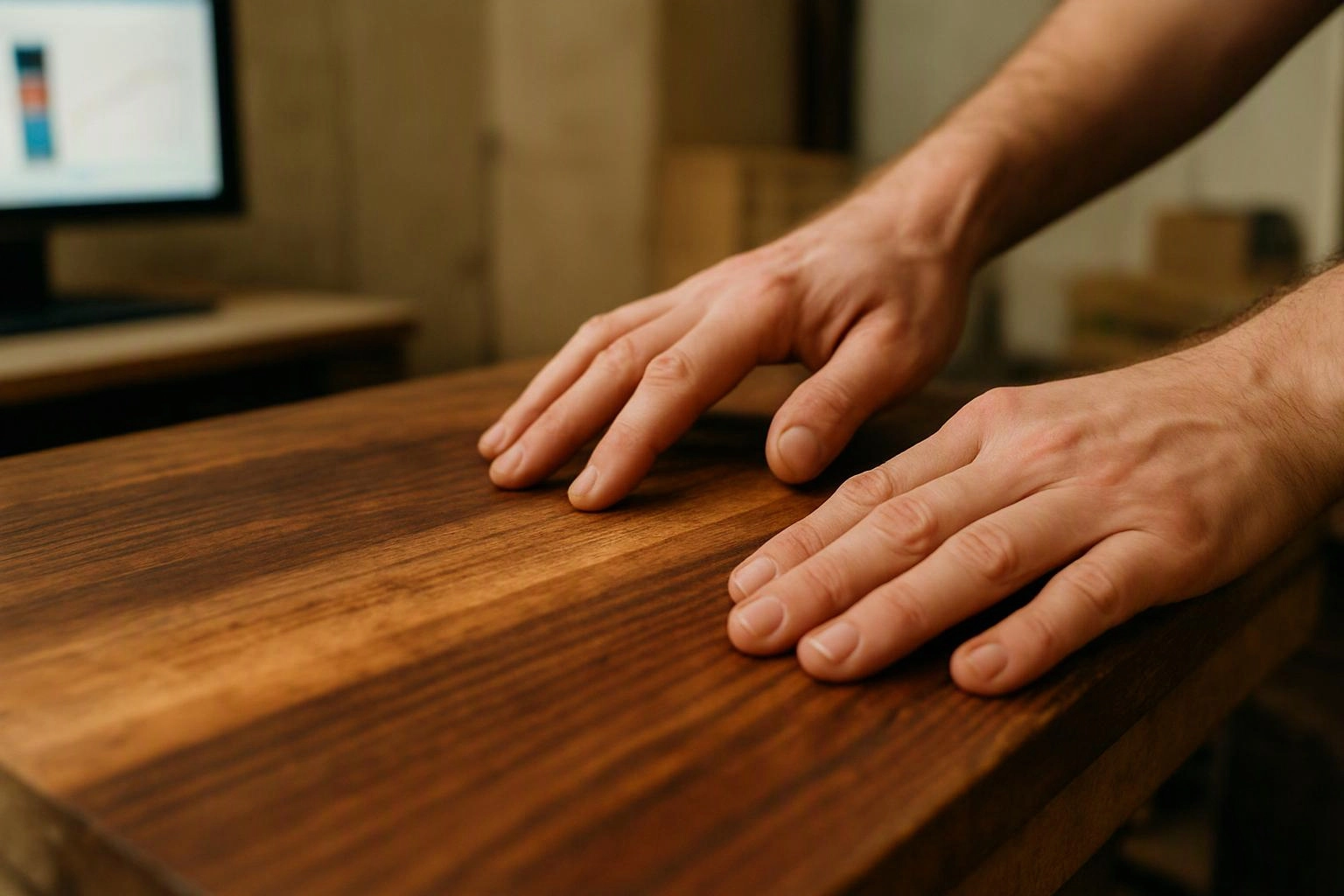
Lap Marks form when one area of wet stain overlaps another area that has started to dry. The overlap can hold more color, so the deck shows a darker band or a clear edge. Sun, wind, porous wood, and slow application can make the problem more visible.
Related glossary terms: Back Rolling, Brush Marks, Wood Stain.
Deck staining works best when each section stays wet long enough to join the next section. An applicator keeps a wet edge and works along the board direction. Wood Stain may look uneven if the surface absorbs it at different rates. Back Rolling can help spread the coating and soften visible overlap lines while the stain remains workable.
From the Thomas J. Painting team
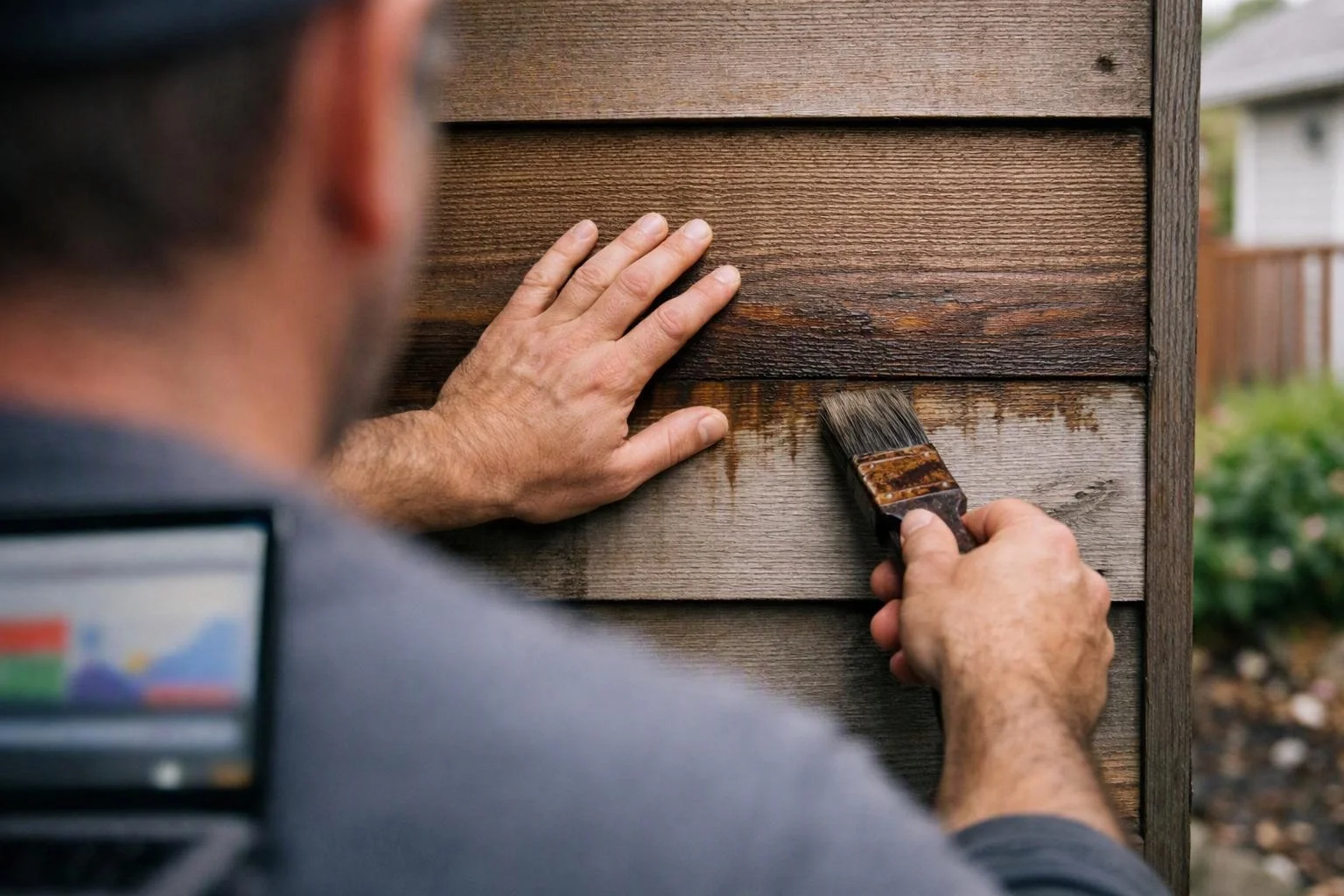
When we stain a deck, we plan sections around the board layout and the surface condition. We watch the wet edge as we work, and we inspect the finish after it settles. If overlap shows, we check the stain load, drying conditions, and wood absorption before choosing a correction.
Lap Marks in Practice: A Real-World Example
A homeowner has a cedar deck with darker bands across several boards. The bands formed where one stained section overlapped a drying section, so the finish needs review before another coat is applied.
Related Services
Related Terms
Back Rolling
Back Rolling is a painting method that follows spray application with a roller. The roller presses…
Brush Marks
Brush Marks are visible lines, ridges, or uneven areas left by a paintbrush as coating spreads…
Wood Stain
Wood Stain is a colored finish that soaks into wood and changes its appearance while showing…
Recoat Window
A recoat window is the period when a coating is ready to receive another coat. The…
Thomas J. Painting
Have Questions About Lap Marks?
Contact Thomas J. Painting for practical guidance on Lap Marks and related painting contractor work in Bellevue.