
What Is Sanding?
Sanding is the process of rubbing a surface with abrasive paper or pads to smooth it, remove loose material, or improve paint adhesion. On cabinets, sanding can dull a glossy finish, level minor flaws, and help primer bond. The method and pressure depend on the existing coating and the condition of the wood.
Quick Facts About Sanding
Category
Surface preparation
Used for
Smoothing and paint adhesion
Common confusion
Sanding is not paint stripping
Also called
Abrasion
Often discussed with
Cabinet Painting
Key Takeaways About Sanding
- Sanding changes surface texture without removing every coating.
- Light pressure helps prevent scratches and exposed wood.
- Sanding is not the same as stripping old paint.
How Sanding Works
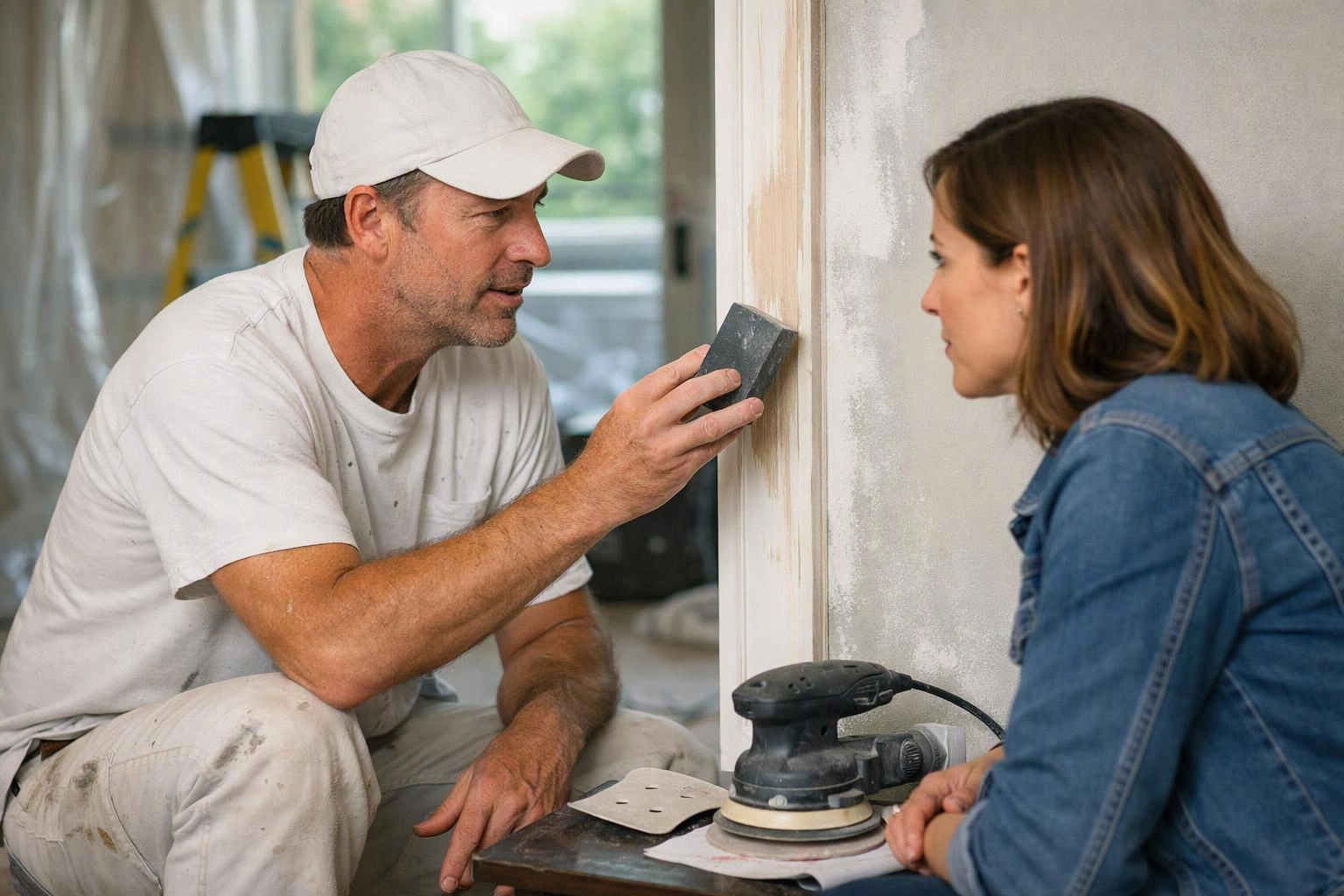
Sanding uses an abrasive surface to remove raised fibers, loose coating, and small surface flaws. The abrasive scratches the surface in a controlled way. These fine scratches give primer or paint a better surface to grip.
Related glossary terms: Surface Preparation, Paint Adhesion, Wood Filler.
The approach depends on the cabinet material and existing finish. A painter may sand by hand around profiles and use a sanding block on broad panels. Dust is removed before coating, because leftover dust can leave rough spots or weaken the finish.
Sanding and Cabinet Painting
Cabinet sanding usually supports cleaning, repairs, priming, and painting. It can smooth wood filler after repairs and reduce the shine on a glossy coating. Sanding does not remove every layer of old paint. Full coating removal calls for a different process.
Expert Note
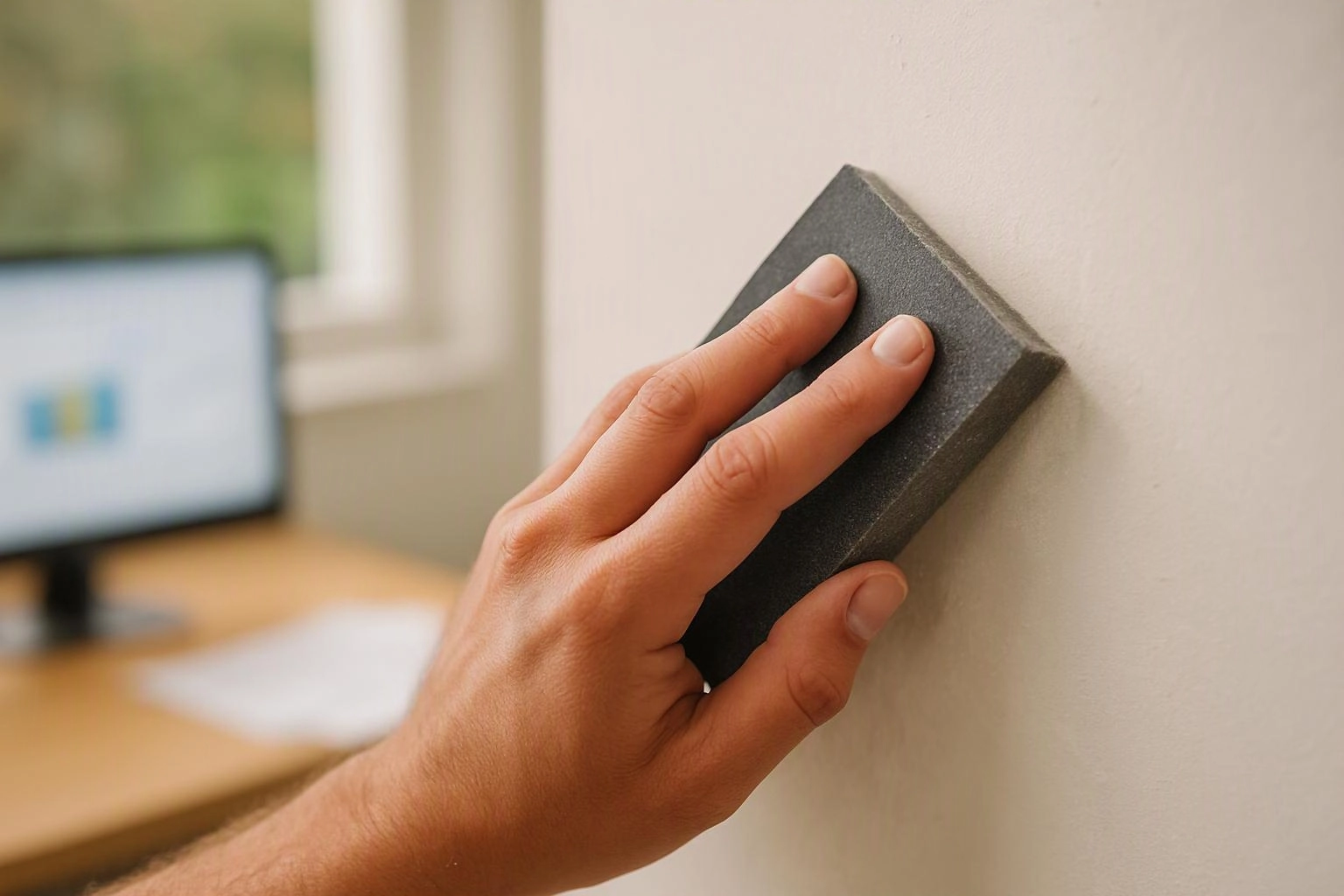
When we sand cabinets, we check the existing finish, exposed wood, and repaired areas before choosing an abrasive method. We work carefully around edges and profiles, then remove dust before primer or paint. Our team also checks the surface by touch and sight for scratches, residue, or uneven areas.
Sanding in Practice: A Real-World Example
For a kitchen cabinet repaint, sanding can dull the old glossy coating and smooth filled holes from removed hardware. The surface is then cleaned so primer can form an even base.
Related Services
Related Terms
Surface Preparation
Surface Preparation is the cleaning, repair, and conditioning of a surface before paint is applied. The…
Paint Adhesion
Paint Adhesion is the bond that holds a paint film to a surface after application and…
Wood Filler
Wood Filler is a repair compound that fills small holes, cracks, dents, and gaps in wood…
Primer
A primer is a preparatory coating applied before paint to help the finish bond, cover stains…
Painter-Bellevue-Wa.com
Have Questions About Sanding?
Contact Painter-Bellevue-Wa.com for practical guidance on Sanding and related painting contractor work in Bellevue.