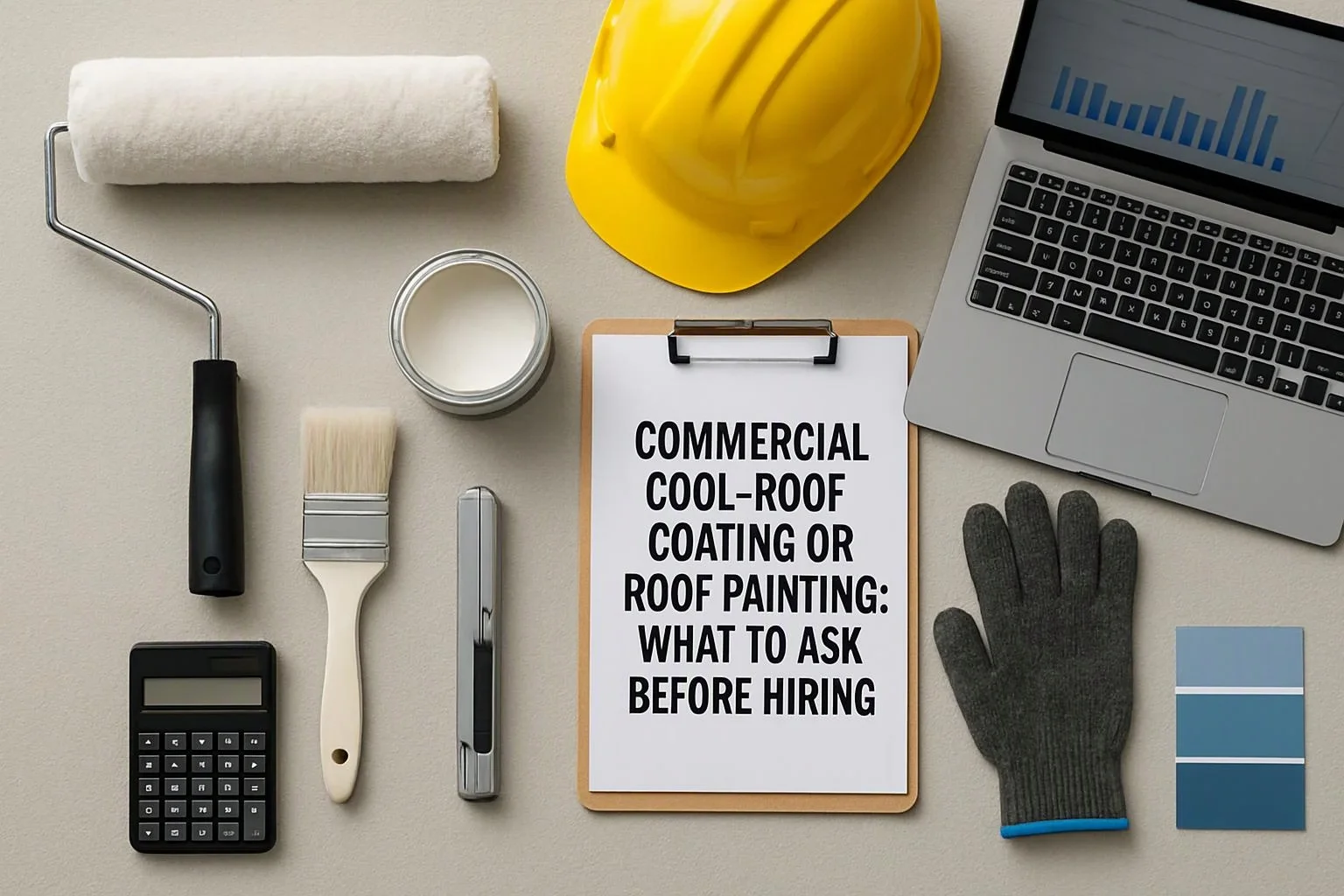
Commercial Cool-Roof Coating or Roof Painting: What to Ask Before Hiring
Commercial cool-roof coating is designed for roof protection, reflectivity, and possible compliance needs, while roof painting mainly refreshes appearance. Thomas J. Painting helps buyers compare roof condition, product details, maintenance needs, and proposal scope before work begins.
Get a Free EstimateQuick Picks
Cool-roof coating and roof painting serve different commercial roof goals. The right choice depends on the roof substrate, project purpose, and required documentation.
- Commercial cool-roof coating fits performance, roof protection, and compliance-focused projects.
- Commercial roof painting fits appearance updates and compatible surface renewal.
What’s the Difference Between Cool-Roof Coating and Roof Painting?
Commercial cool-roof coating is a roof system product that helps manage heat and protect the roof, while commercial roof paint mainly changes color and appearance.
A cool-roof coating is selected for the roof surface, roof condition, and performance goal. Its technical data may include solar reflectance and thermal emittance, which describe how the finish handles sunlight and heat.
Roof paint is usually an appearance-focused finish. We still check the roof substrate, existing roof repairs, and coating adhesion before recommending any product.
How Do Cool-Roof Coating and Roof Painting Compare?
Cool-roof coating is usually the stronger fit for performance or compliance goals, while roof painting is better suited to appearance-focused work when the existing surface supports paint.
Project cost depends on roof condition, surface preparation, product layers, access, repairs, and documentation needs. Our proposal explains these factors instead of hiding them inside one broad line item.
| Factor | Cool-Roof Coating | Roof Painting | Best Fit |
|---|---|---|---|
| Project cost | May be higher when testing, preparation, and documentation are included. | May be lower when the surface needs only compatible paint and basic preparation. | The roof scope decides the price. |
| Project timeline | Depends on inspection, repairs, drying conditions, and coating layers. | Depends on preparation, weather, and paint requirements. | The site plan sets the schedule. |
| Maintenance | Needs planned checks for wear, seams, drainage, and coating condition. | Needs checks for fading, peeling, adhesion, and surface damage. | Both need a maintenance plan. |
| Roof performance | Can support reflectivity and roof protection goals. | Primarily changes the finish and appearance. | Cool-roof coating supports performance goals. |
| Compliance documentation | Can include product data and reflectance documentation. | May not address cool-roof requirements. | Cool-roof coating fits documented goals. |
| Best-fit application | Performance, protection, and compliance-focused work. | Appearance updates on a compatible roof surface. | The project objective decides. |
What Are the Advantages of Commercial Cool-Roof Coating?
Commercial cool-roof coating supports roof reflectivity, roof protection, and documented performance goals. We match the coating system to the roof surface and planned use.
Best for: commercial roofs where performance, protection, or cool-roof compliance matters most.
When Is Commercial Roof Painting the Better Choice?
Commercial roof painting is the better choice when the roof is suitable for paint and the main goal is appearance or surface renewal.
We review the substrate before selecting a paint system. Loose material, active leaks, damaged flashing, or poor adhesion can require roof repairs before painting.
Commercial roof painting may suit a building owner who wants a color change or a refreshed finish. The result still depends on paint compatibility, surface preparation, and application conditions.
What Are the Advantages of Commercial Roof Painting?
Commercial roof painting can refresh a compatible roof when appearance and surface renewal lead the project. Our team checks the existing finish before recommending paint.
Best for: compatible commercial roofs where appearance and surface renewal matter most.
What Should a Cool-Roof Coating Proposal Include?
A cool-roof coating proposal should identify the roof condition, preparation work, product system, application method, performance data, warranty terms, exclusions, and maintenance plan.
Our commercial roof inspection looks at the membrane, roof deck indicators, flashing, drainage details, seams, and visible repairs. We explain which preparation steps support coating adhesion and which conditions remain outside the coating scope.
The proposal should name the coating manufacturer and include the product data sheet. It should also explain technical data, application method, coverage area, coating thickness, and application conditions.
Reflectance documentation and emittance documentation matter when the project has cool-roof compliance requirements. The proposal should state warranty terms, compliance requirements, proposal exclusions, and maintenance responsibilities in plain language.
Which Product Details Should Appear in a Cool-Roof Coating Quote?
A cool-roof coating quote should name each coating layer, its compatible substrate, performance data, application requirements, and supporting manufacturer documents.
We identify the product name and coating type for the proposed roof coating system. The quote should also show whether the system uses a primer, base coat, topcoat, or another required layer.
Substrate compatibility should match the existing roof material and surface condition. Solar reflectance, thermal emittance, application rate, drying conditions, and manufacturer documentation should appear when they affect the project goal.
Buyers can review our Commercial cool-roof compliance coating application service to understand how product selection connects with roof condition and documentation.
What Should You Ask Before Hiring for Commercial Roof Coating or Painting?
Ask questions that connect the roof condition, product system, work limits, and maintenance plan to your project goal. We answer these points through a clear inspection and proposal scope.
How We Build a Clear Commercial Roof Coating or Painting Proposal
Thomas J. Painting reviews the roof surface, confirms the project goal, explains the product system, and prepares a clear proposal during a Free Consultation.
Our commercial roof inspection starts with roof condition and visible problem areas. We then define surface preparation, review product requirements, and separate roof repairs from coating or painting work.
Our scope of work names the application method, preparation tasks, materials, proposal exclusions, inspection process, and maintenance plan. We also explain warranty terms and product documentation so the buyer can review the full system.
The cost of commercial roof work depends on the roof condition, access, preparation, repairs, product layers, and documentation needs. Request a quote from us so the proposal reflects the actual roof and project objective.
Which Option Fits Your Commercial Roof?
Choose cool-roof coating when roof performance or compliance matters most, and choose roof painting when a compatible roof mainly needs an appearance-focused finish.
Roof condition comes first because neither finish replaces needed roof repairs. Building use, climate exposure, compliance objective, appearance objective, and maintenance plan also shape the decision.
We use those factors to build a practical scope for commercial cool-roof compliance coating application or commercial roof painting. A clear proposal helps you compare the work by project fit, not by product name alone.
Questions About Commercial Cool-Roof Coating and Roof Painting
Can roof paint provide the same benefits as a cool-roof coating?
Roof paint doesn't automatically provide the same performance or compliance benefits as a cool-roof coating. Thomas J. Painting reviews the product data, roof substrate, reflectance, emittance, and project requirements before recommending a system.
Does a cool-roof coating repair an actively leaking commercial roof?
No, a cool-roof coating doesn't replace repairs for an actively leaking commercial roof. We inspect the leak area, identify needed repairs, and explain whether the roof can support the proposed coating system.
What roof surfaces can receive a commercial cool-roof coating?
Commercial roof surfaces can receive a cool-roof coating only when the selected system supports the substrate and existing conditions. We review the membrane, seams, flashing, repairs, cleanliness, and adhesion before selecting products.
Why do surface preparation and product compatibility matter before coating a commercial roof?
Surface preparation and product compatibility matter because coating adhesion depends on a sound, suitable surface. We address cleaning, repairs, existing finishes, and application conditions before applying the roof coating system.
How can a commercial roof coating proposal show whether the product supports a compliance goal?
A commercial roof coating proposal can show compliance support through product identification, solar reflectance, thermal emittance, manufacturer documentation, and stated application requirements. We include the relevant documents and explain how the proposed system fits the stated goal.
Plan Your Commercial Roof Project
Thomas J. Painting can review your commercial roof, explain the coating or painting options, and prepare a proposal that matches the work needed.
Request a Free Consultation to discuss your roof condition, performance goals, appearance needs, and proposal scope.