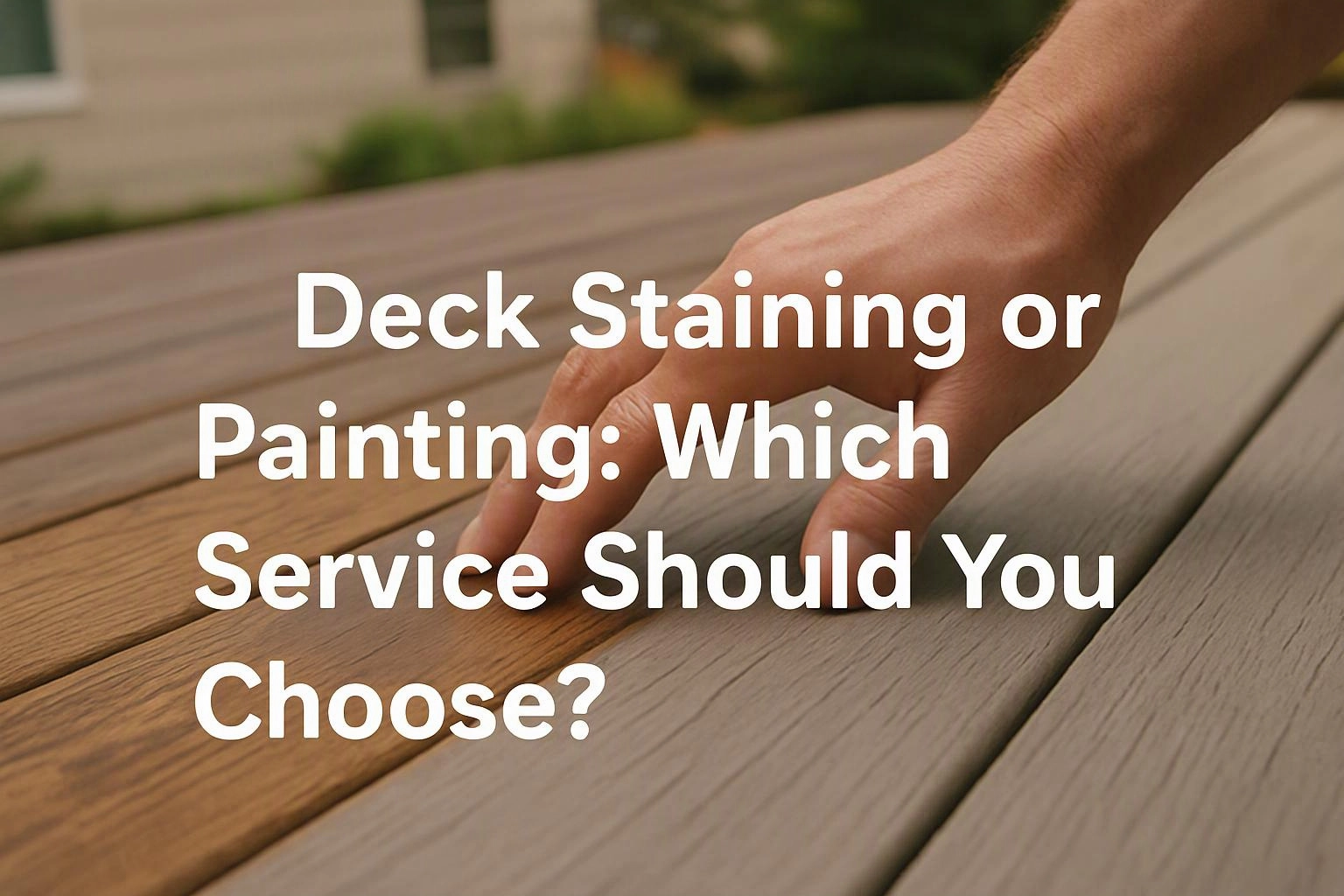
Deck Staining or Painting: Which Service Should You Choose?
Deck staining suits homeowners who want visible wood grain and easier touch-ups, while deck painting suits those who want solid color and stronger surface coverage. Thomas J. Painting checks the existing finish, wood condition, and project goals before recommending an option. We compare appearance, preparation, maintenance, and finish compatibility with you.
Get a Free EstimateDeck Staining vs Painting at a Glance
Deck staining is usually the better fit for visible wood grain, while deck painting is better for solid color and broader surface coverage. The right choice also depends on preparation needs and maintenance preferences.
Both options can protect deck boards, railings, stairs, and posts when the surface is ready. Our team reviews the wood condition and old finish before we recommend a coating.
- Deck staining fits a natural wood appearance with visible grain.
- Deck painting fits solid color and more even visual coverage.
| Factor | Deck Staining | Deck Painting |
|---|---|---|
| Cost drivers | Preparation, stain type, wood condition, and access | Preparation, paint type, repairs, coats, and access |
| Project timeline | Depends on cleaning, drying, repairs, and finish removal | Depends on repairs, stripping, drying, and coating needs |
| Maintenance | Often allows focused touch-ups as the finish wears | May need attention where paint chips, peels, or wears |
| Appearance | Natural wood look with visible grain | Opaque finish with a consistent solid color |
| Best for | Wood that has an appealing texture and grain | Older or mixed boards needing broader visual coverage |
When Deck Staining Is the Better Choice
Deck staining is the better choice when you want to keep the natural wood look and allow the grain to show.
Deck stain can be transparent, semi-transparent, or more solid in appearance. A penetrating finish works into prepared wood, so weather exposure and surface condition matter. We review how the boards absorb the finish before choosing the right stain.
Our Deck Staining service focuses on proper cleaning, preparation, and finish selection. The goal is a finish that suits both the wood and your maintenance plans.
Advantages of Deck Staining
Best for Deck Staining
Deck staining works well for newer wood, weathered wood with attractive texture, and decks where a natural appearance matters.
Weathered wood may need cleaning, light preparation, or repairs before staining. We check for dry areas, damaged boards, and uneven absorption before applying the finish.
Best for: homeowners who want wood texture and a natural appearance to remain visible.
When Deck Painting Is the Better Choice
Deck painting is the better choice when you want a solid color or need broader coverage over uneven wood appearance.
Deck paint creates an opaque finish that can support a clear color change. It can make mixed boards look more consistent and reduce the focus on minor visual differences. We still address damaged wood before coating because paint cannot correct structural or severe surface problems.
Advantages of Deck Painting
Best for Deck Painting
Deck painting works well for older wood, mixed boards, and projects that need a solid color or clear appearance change.
Older decks may show stains, patches, or varied grain patterns. Our crew checks whether the existing surface can support paint and prepares it for proper adhesion.
Best for: homeowners who want a solid color and wider visual coverage.
Does Deck Staining Require Stripping the Old Finish?
Deck staining may require stripping when the old finish is peeling, incompatible, or too heavy for the new stain to absorb.
Old paint usually needs more finish removal than an old stain. A peeling finish can block absorption and weaken surface adhesion. We test the existing coating, identify problem areas, and choose the needed wood preparation.
Our paint stripping service can help when old paint prevents a new finish from bonding or reaching the wood. We also remove old stain when finish compatibility calls for a cleaner surface.
What Changes the Cost of Deck Staining or Painting?
The cost of deck staining or painting changes with deck size, wood condition, preparation work, finish selection, access, and repair needs. We review these factors during a Free Consultation and explain what the estimate includes.
Old finish removal can add preparation work, especially when paint is peeling or layered. Coating type, number of coats, railings, stairs, posts, and difficult access can also change the estimate scope.
Our deck estimate separates preparation from coating work when those tasks differ. Request a quote through our contact page so we can review the actual deck condition.
How We Help You Choose the Right Deck Finish
Thomas J. Painting uses a deck inspection and finish review to match the project to your wood and appearance goals.
Our team can recommend deck staining when the wood appearance should remain visible. We can also explain when paint stripping and deck painting better suit the existing surface.
Which Service Fits Your Deck?
Choose deck staining for visible grain and a natural look, or choose deck painting for solid color and wider visual coverage.
Deck staining fits wood with texture you want to show. Deck painting fits mixed or older boards when you want a stronger appearance change. The existing finish, wood condition, preparation needs, and maintenance plan should guide the final choice.
We can help you compare the finish options before work begins. Our recommendation focuses on the deck’s condition and your project goals.
Common Questions About Deck Staining and Painting
Can you paint over a stained deck?
Thomas J. Painting can paint over a stained deck when the old finish is sound and the surface is prepared for adhesion. We remove or address loose, heavy, or incompatible finish before applying deck paint.
Is stain or paint better for an older deck?
Deck paint often fits an older deck when mixed boards need solid color and broader visual coverage. Deck stain may fit older wood when the grain and texture still look appealing.
What happens if old deck paint is peeling?
Peeling deck paint needs finish removal and surface preparation before new coating work. We remove failing areas, check the wood condition, and prepare the surface for better paint adhesion.
Can deck stain hide damaged or uneven wood?
Deck stain usually does not hide damaged or uneven wood as fully as an opaque coating. We identify repair needs first and explain whether stain or paint better matches the surface.
How do I maintain a painted or stained deck?
Deck maintenance includes watching for peeling, fading, worn areas, moisture exposure, and surface damage. We can explain the upkeep needs for the finish selected and help plan future touch-ups.
Thomas J. Painting can review your deck, explain the preparation needs, and recommend the finish that fits your goals.
Request a Free Consultation