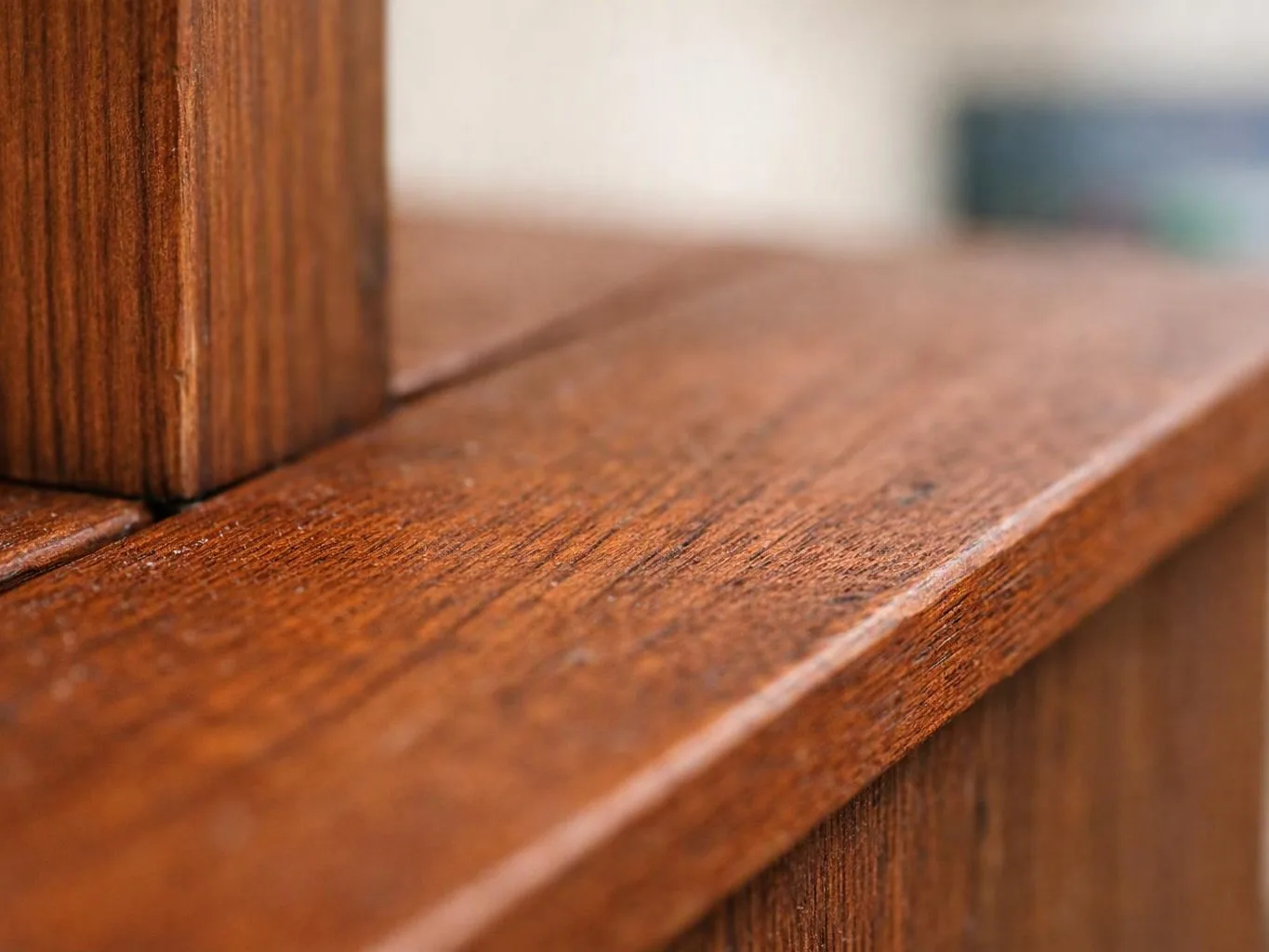
How to Tell When Your Deck Needs Restaining
Deck restaining is needed when color fades, water stops beading, stain peels, or boards feel dry, split, or fuzzy. Thomas J. Painting checks the surface condition and recommends the right preparation before applying new deck stain.
Get a Free Estimate
What Are the Signs Your Deck Needs Restaining?
A deck needs restaining when its protective coating has worn down or the wood shows visible weather damage. These signs help you decide whether the deck needs cleaning, stain removal, sanding, repairs, or a new finish.
One sign may call for maintenance, while several signs point to broader preparation. We inspect the surface before recommending deck refinishing or renewing deck stain.
What Does It Mean When Water No Longer Beads on Your Deck?
Water beading that has stopped usually means the stain no longer protects the wood surface well.
When water soaks in, the boards face more moisture exposure. Repeated absorption can speed up fading, fuzzing, and splitting.
We use the water response as one part of a deck inspection. Our team also checks the worn finish, surface condition, and remaining stain before planning preparation.
Why Is Deck Stain Peeling or Flaking?
Peeling stain or flaking stain means the coating has lost adhesion to the deck surface.
Moisture can get below an old coating and push it away from the wood. Poor cleaning, trapped residue, and incompatible old stain can also affect adhesion.
We identify loose areas and assess the old coating before choosing stain removal, cleaning, sanding, or other surface preparation. New stain needs a sound surface so it can bond properly.
What Do Dry, Split, or Fuzzy Deck Boards Indicate?
Dry deck boards, split wood, and fuzzy fibers indicate that weathering has started to affect the wood beneath the worn finish.
Dry boards have lost surface protection, while splits can allow moisture deeper into the wood. Fuzzy fibers often appear when weather exposure breaks down the surface.
We check board condition before staining. Our crew separates cosmetic weathering from board damage that may need deck board repair.
How Should You Check Your Deck Before Restaining?
A deck inspection should check color, water response, loose coating, wood fibers, and board damage. You can make these simple observations from safe ground-level areas.
Don't climb onto unstable surfaces or use ladders for a quick check. We handle difficult access and can assess areas that aren't safe to reach.
Should You Restain the Deck Yourself or Call Us?
Simple visual checks are suitable for many homeowners, but extensive preparation and difficult access call for our crew. The right choice depends on coating failure, board condition, and the amount of cleaning needed.
| Factor | What you can do yourself | What we do |
|---|---|---|
| Deck cleaning | Notice dirt, algae, and surface residue from safe areas. | We choose cleaning methods that suit the wood and old coating. |
| Surface preparation | Identify loose stain and rough fibers without disturbing unstable boards. | We manage cleaning, sanding, and stain removal as the surface requires. |
| Ladder safety | Stay at ground level when access feels difficult or unsafe. | Our crew handles elevated and difficult-to-reach areas. |
| Stain application | Review color and finish options before choosing a coating. | We apply the selected stain after the wood is ready and dry. |
Thomas J. Painting should manage widespread coating failure, difficult access, or board damage. You can explore our Deck Staining service to see how we approach the work.
What Happens Before New Deck Stain Is Applied?
The deck staining process starts with surface cleaning and a close review of the old finish. We identify areas that need stain removal, sanding, or wood preparation.
Drying conditions matter because damp wood can affect stain application and adhesion. We wait for suitable surface conditions before applying the selected coating.
Stain selection depends on the deck's condition and the look you want. Options can include transparent stain, semi-transparent stain, or solid-color stain.
Our Free Consultations help us review the deck and explain the preparation needed before restaining.
How Can You Protect a Restained Deck?
Deck maintenance protects a restained surface by limiting moisture, debris, and repeated wear.
Keep leaves and dirt from collecting on the boards, stairs, and areas near the railings. Move furniture carefully so it doesn't scrape the finish.
Check the deck during routine cleaning for fading, water absorption, peeling, or new splits. We can review the surface when the finish begins to show renewed wear.
Questions About Deck Restaining
Can you restain a deck without removing all the old stain?
Yes, Thomas J. Painting can restain some decks without removing every trace of old stain. We first check whether the remaining coating is sound, clean, and compatible with the new stain.
Can deck boards be restained when they have small cracks?
Yes, deck boards with small cracks may be restained after we assess their condition. Larger splits, soft areas, or unsafe boards may need repair before stain application.
What should you do if deck stain peels soon after application?
Peeling deck stain soon after application needs a surface review before another coat is added. We check moisture, cleaning, preparation, stain adhesion, and the condition of the old coating.
Does a faded deck always need sanding before restaining?
No, a faded deck doesn't always need sanding before restaining. We decide after checking the old stain, surface texture, loose coating, and wood condition.
Get Your Deck Ready for Restaining
Thomas J. Painting checks the deck, explains the preparation, and recommends a suitable staining approach. Contact us to discuss your deck's surface condition and next steps.
Request a Deck Restaining Consultation