
What Is Coverage Rate?
Coverage Rate is the area a paint or coating can cover with a set amount of material while producing the intended finish. The rate depends on surface texture, porosity, paint type, application method, and color change. Painters use it to estimate material needs and plan commercial painting work.
Quick Facts About Coverage Rate
Category
Paint application metric
Used for
Material planning
Common confusion
Coverage versus hiding power
Also called
Paint Coverage, Spreading Rate
Often discussed with
Commercial Painting
Key Takeaways About Coverage Rate
- Coverage Rate changes with surface texture and paint type.
- Painters use it to plan material use and application.
- Coverage Rate is not the same as hiding power.
How Coverage Rate Works
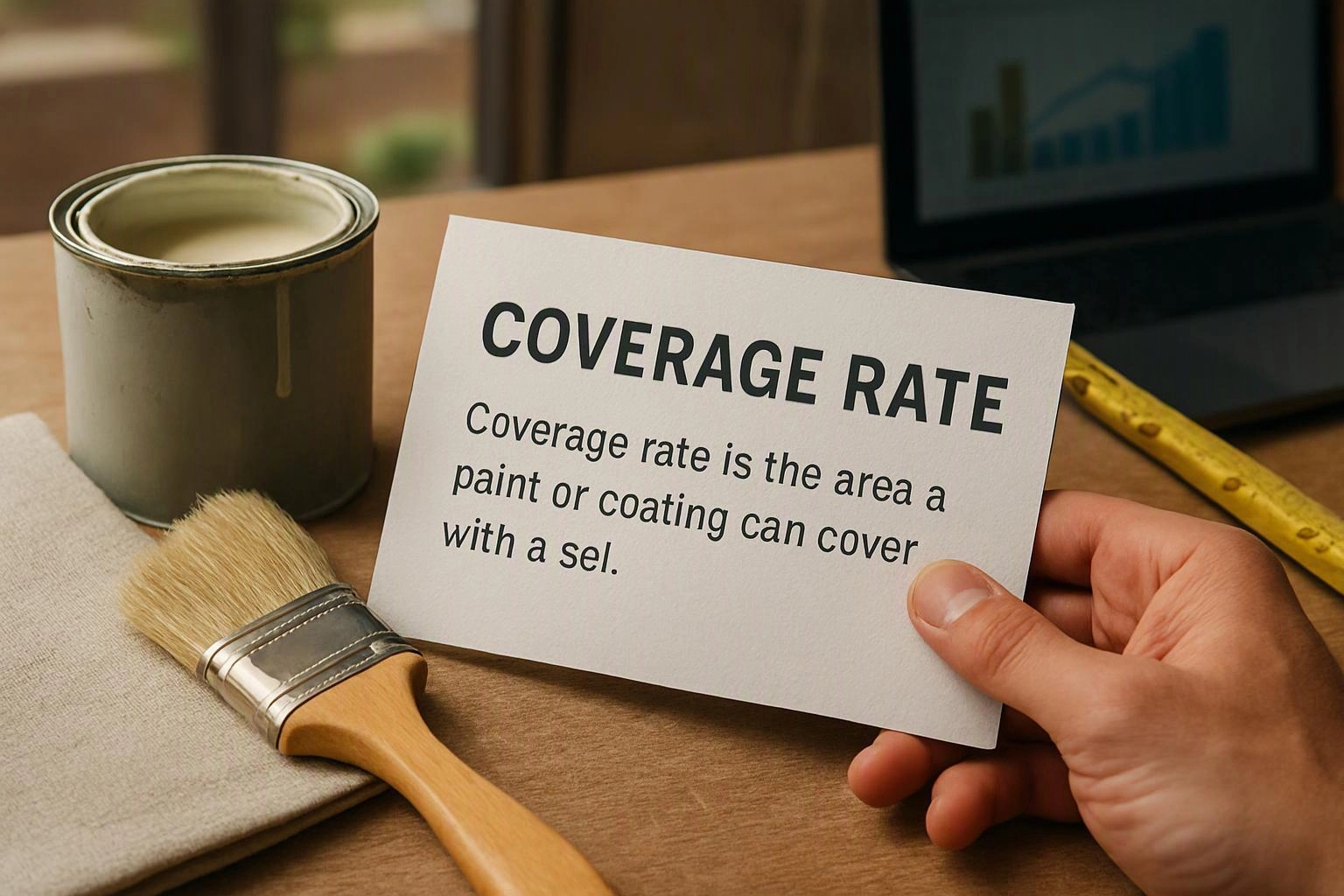
Coverage Rate describes how far a paint or coating spreads while maintaining the planned finish. Smooth, sealed surfaces usually need less material than rough or porous surfaces. Dark colors and strong color changes can also affect the result.
Related glossary terms: Hiding Power, Film Thickness, Surface Preparation.
Commercial painters consider the surface condition, coating type, and application method before planning material use. A sprayer may spread material differently from a roller. The team also checks whether the surface has absorbed the coating evenly.
Coverage Rate in Commercial Painting
Coverage Rate helps connect the coating plan to the actual building surface. A large textured wall may need more material than a smooth metal panel of the same area. The rate supports planning, but the finished appearance still depends on preparation and application.
From the Thomas J. Painting team
When we plan commercial painting work, we review the surface, coating, and application method together. We look for porosity, texture, and uneven absorption before estimating material use. We also check the finish as work progresses so the planned coverage matches the surface conditions.
Coverage Rate in Practice: A Real-World Example
A commercial office has smooth painted walls and textured concrete sections. The smooth walls may spread the coating farther, while the concrete absorbs more material and needs closer coverage checks.
Related Services
Related Terms
Hiding Power
Hiding Power is a paint’s ability to cover the color, pattern, or stains beneath it. Strong…
Film Thickness
Film thickness is the depth of a coating after application or drying. Painters use it to…
Surface Preparation
Surface Preparation is the planned cleaning, repair, sanding, scraping, and priming of a surface before paint…
Paint Sprayer
A paint sprayer is a powered tool that turns liquid paint into a fine spray for…
Thomas J. Painting
Have Questions About Coverage Rate?
Contact Thomas J. Painting for practical guidance on Coverage Rate and related painting contractor work in Bellevue.