
What Is Hiding Power?
Hiding Power is a paint’s ability to cover the color, pattern, or stains beneath it. Strong hiding power creates an even surface with less show-through. Paint formula, pigment concentration, color choice, surface condition, and applied film thickness all affect the result on walls, ceilings, trim, and other interior surfaces.
Quick Facts About Hiding Power
Category
Paint performance property
Used for
Judging surface coverage
Common confusion
Not the same as coverage rate
Also called
Opacity
Often discussed with
Interior Painting
Key Takeaways About Hiding Power
- Hiding power describes coverage strength, not paint sheen.
- Dark colors and stains may need added surface preparation.
- Coverage rate and hiding power describe different paint qualities.
How Hiding Power Works
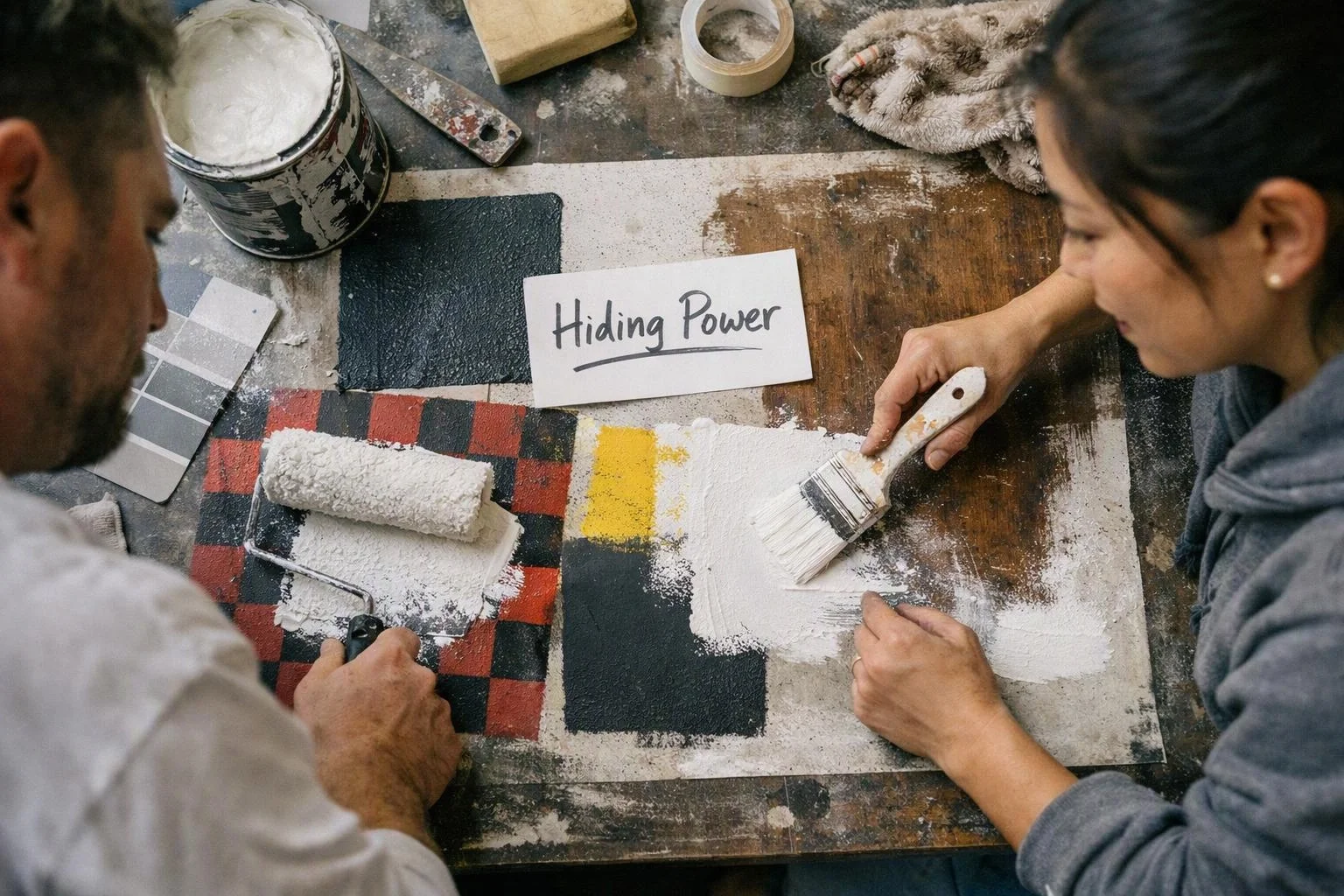
Hiding Power depends on how paint pigments block light from reaching the surface below. Dense pigments usually cover stronger colors more effectively. The paint’s color also affects how much of the base surface shows through.
Related glossary terms: Coverage Rate, Drywall Primer, Bonding Primer.
Surface texture and application affect the finished result. Porous drywall can absorb paint unevenly, while stains may show through a regular wall coating. A suitable primer can create a more even base and help the finish coat cover consistently. Coverage rate describes how much area a product may cover, while hiding power describes how well that product blocks what lies underneath.
From the Thomas J. Painting team
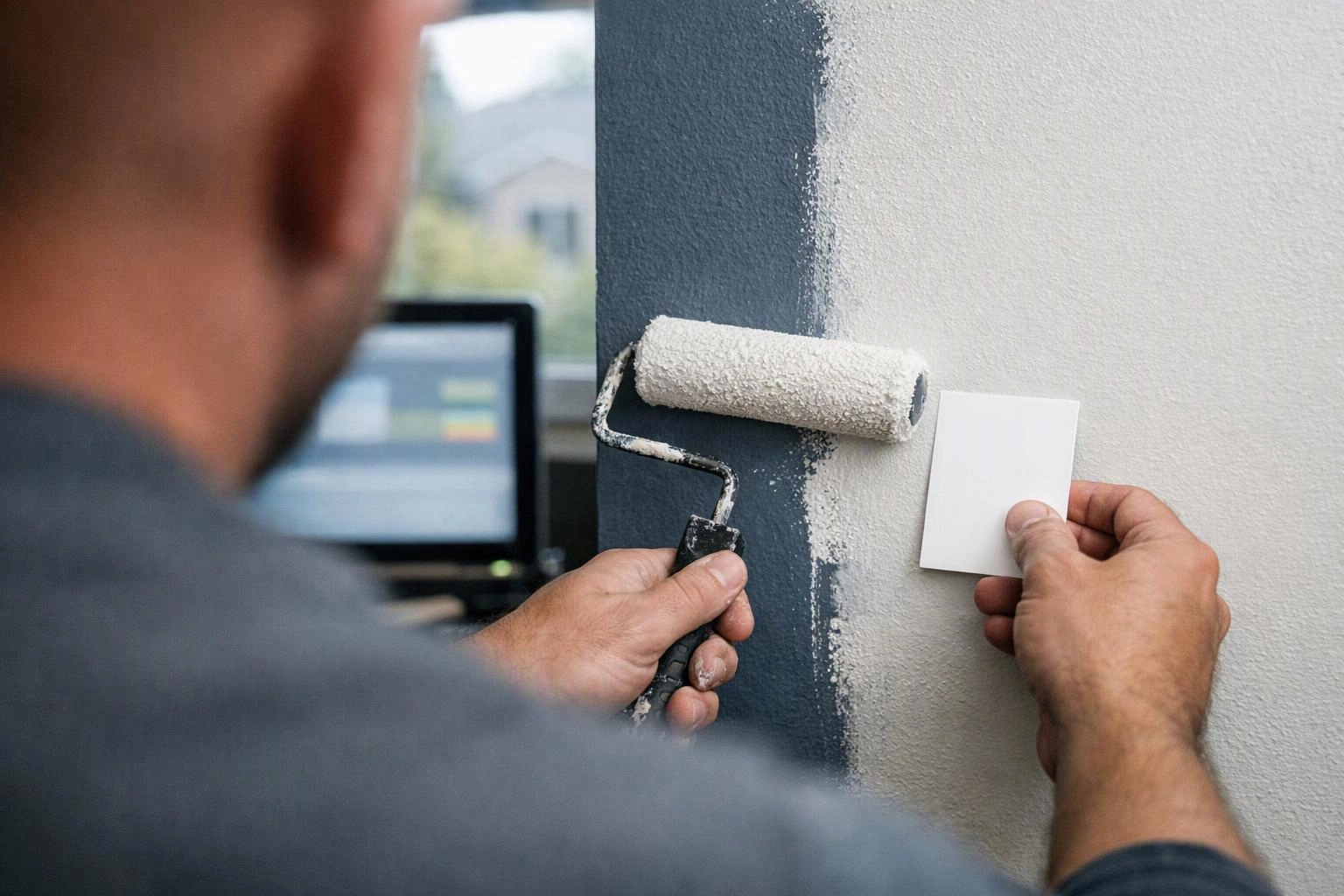
When we plan interior painting, we check the existing color, surface condition, and any visible stains. We may recommend a primer or a different finish-coat color when the base could show through. Our team also checks coverage as the work progresses, so thin or uneven areas receive attention before the finish is complete.
Hiding Power in Practice: A Real-World Example
A pale wall being repainted in a deep blue may show uneven patches if the base color affects the new coating. For interior painting, the right primer can help the blue finish appear more uniform.
Related Services
Related Terms
Coverage Rate
Coverage Rate is the area a paint or coating can cover with a set amount of…
Drywall Primer
Drywall Primer is a coating made for new or repaired gypsum board. It seals the paper…
Bonding Primer
Bonding Primer is a specialty coating that helps paint stick to smooth, glossy, or difficult surfaces…
Film Thickness
Film thickness is the depth of a coating after application or drying. Painters use it to…
Thomas J. Painting
Have Questions About Hiding Power?
Contact Thomas J. Painting for practical guidance on Hiding Power and related painting contractor work in Bellevue.