
What Is Spalling?
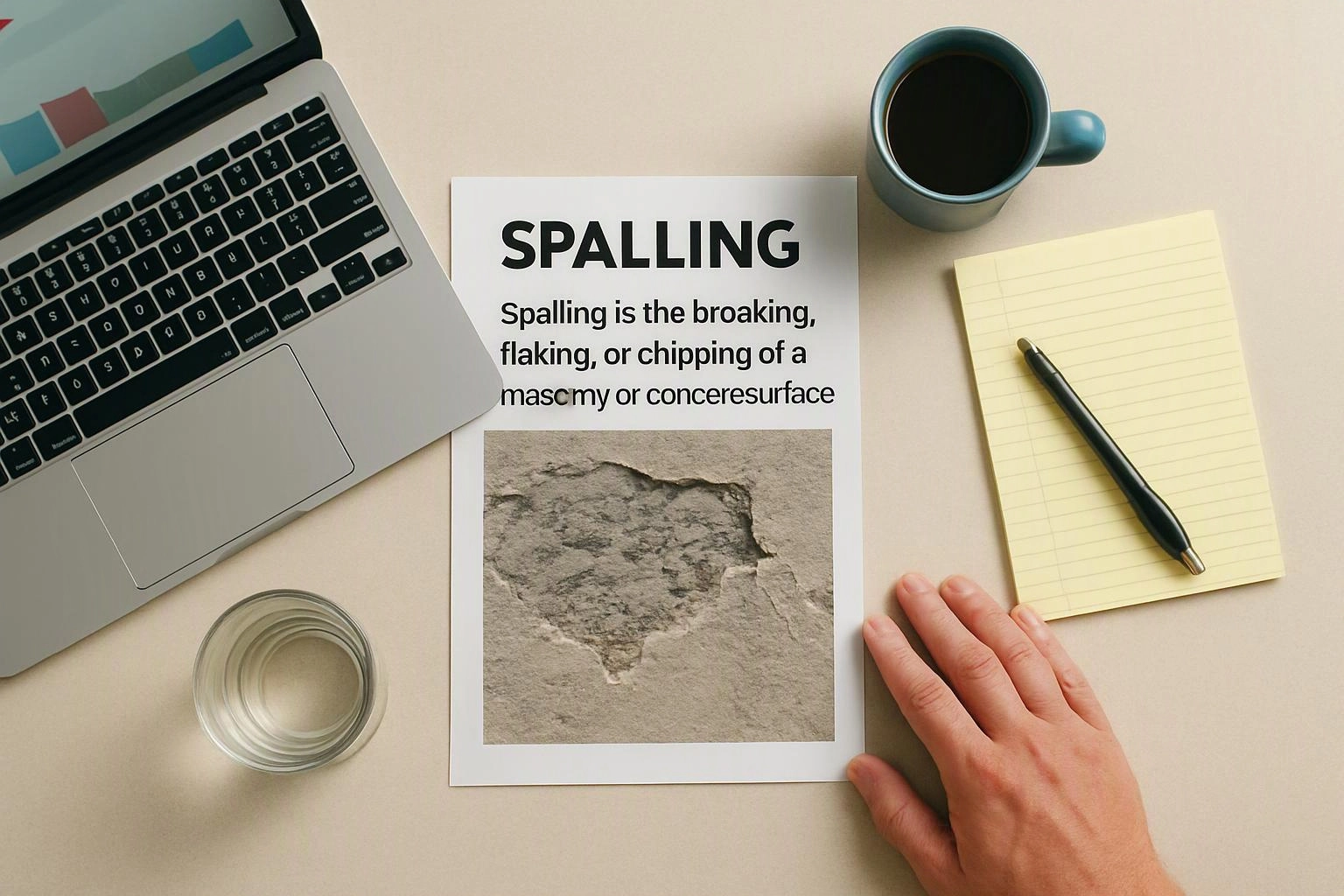
Spalling is the breaking, flaking, or chipping of a masonry or concrete surface. Water can enter small pores, freeze, expand, and push the surface apart. On brick, spalling may remove the hard outer face and expose softer material underneath. Painting cannot correct active spalling, so the damaged area needs assessment and preparation first.
Quick Facts About Spalling
Category
Masonry surface damage
Used for
Describing chipped or flaking brick and concrete
Common confusion
Efflorescence or failing paint
Also called
Concrete Spalling
Often discussed with
Brick Painting, Stucco Painting
Key Takeaways About Spalling
- Spalling leaves rough chips, flakes, or missing surface material.
- Painting over active damage can hide problems without stopping them.
- Spalling is not the same as efflorescence, which leaves a powdery deposit.
How Spalling Works
Spalling starts when moisture enters pores, cracks, or joints in brick or concrete. Freezing water expands inside the material and creates pressure. Repeated wet and dry cycles can also weaken the outer face. The surface may then chip, flake, or break away.
Related glossary terms: Surface Preparation, Paint Adhesion, Primer.
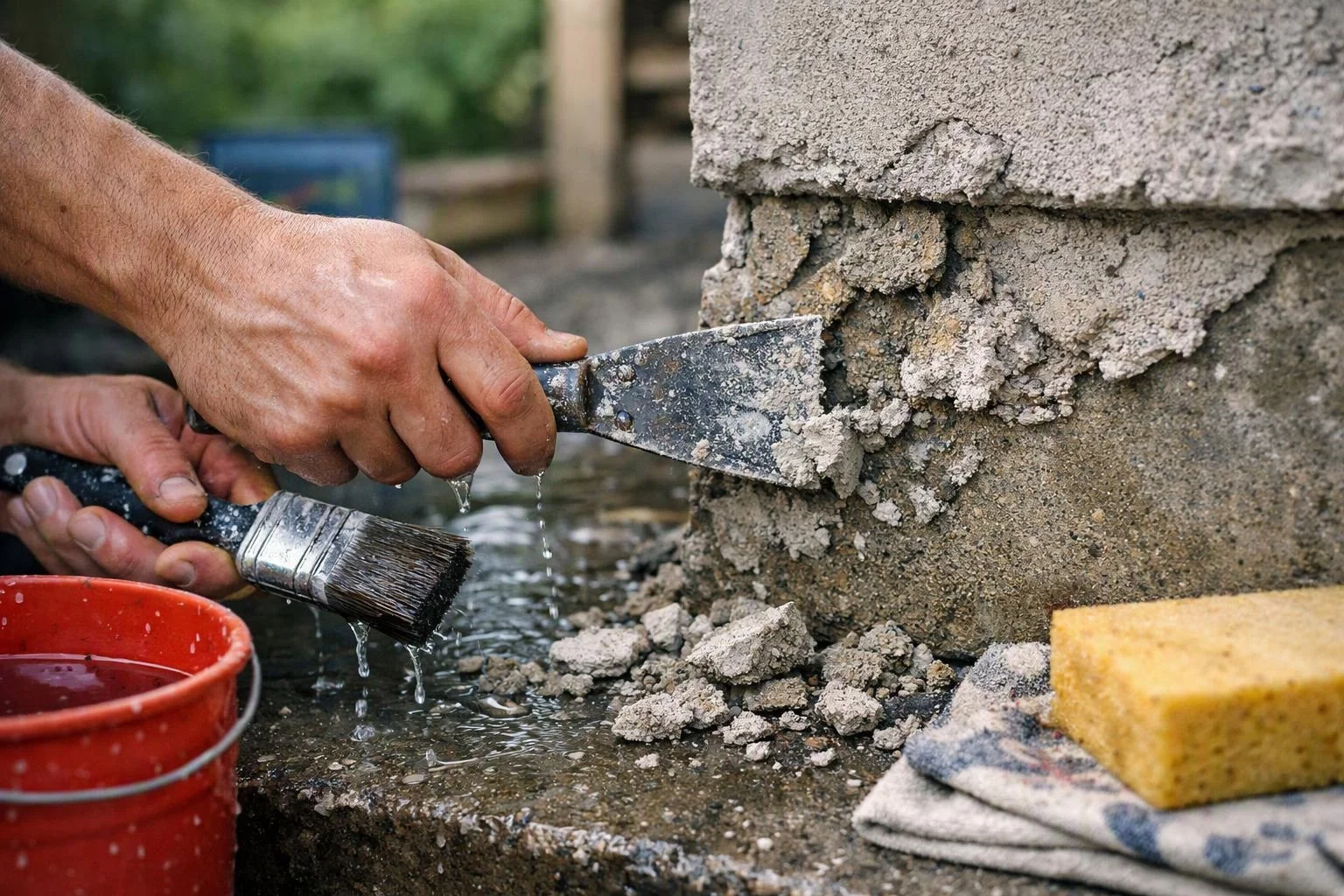
A close inspection looks at the damaged face, nearby joints, and the material beneath the surface. Hollow sounds, loose pieces, and exposed inner material can show that the damage extends beyond a thin paint layer. Preparation may include removing loose material, repairing the masonry, and allowing the surface to dry before priming and painting. Surface preparation helps separate masonry repairs from coating work. Efflorescence is a different condition that appears as a powdery salt deposit.
Expert Note
When we inspect brick before painting, we check for loose faces, open joints, moisture paths, and areas that sound hollow. We separate masonry repair from coating preparation, because paint should bond to a sound surface. Our team also checks repaired areas before primer and finish work begin.
Spalling in Practice: A Real-World Example
A painted brick wall may show small flakes along the lower courses after repeated moisture exposure. The damaged brick surface needs removal or repair before the Brick Painting work proceeds.
Related Services
Related Terms
Surface Preparation
Surface Preparation is the cleaning, repair, and conditioning of a surface before paint is applied. The…
Paint Adhesion
Paint Adhesion is the bond that holds a paint film to a surface after application and…
Primer
A primer is a preparatory coating applied before paint to help the finish bond, cover stains…
Efflorescence
Efflorescence is a white, powdery deposit that forms when dissolved salts move through masonry and reach…
Painter-Bellevue-Wa.com
Have Questions About Spalling?
Contact Painter-Bellevue-Wa.com for practical guidance on Spalling and related painting contractor work in Bellevue.