Exterior Siding Painting Process: Preparation, Coating, and Final Inspection
The exterior house painting process starts with siding inspection and preparation, then moves through repairs, primer, finish coats, and final inspection. Painter-Bellevue-Wa.com checks each stage so the coating bonds well and the finished siding looks even.
Get a Free EstimateWhat Does the Exterior Siding Painting Process Include?
Exterior siding painting includes inspection, preparation, coating application, cleanup, and final inspection.
Our team reviews the siding before choosing a coating system. We look for peeling paint, loose coating, dirt and mildew, surface damage, and moisture concerns.
House painting also includes protecting nearby areas and keeping trim lines neat. The complete workflow helps the new coating bond to a sound surface.
Siding Painting can apply to wood, fiber cement, vinyl, brick, or stucco when the surface is suitable.
What Should You Prepare Before Siding Painting Begins?
Homeowners can prepare by clearing wall areas, protecting movable items, trimming nearby plants, closing windows, and keeping work areas accessible.
Good preparation gives our crew room to inspect, clean, repair, and coat the siding safely. It also helps protect furniture, plants, windows, and other nearby surfaces.
How We Prepare Exterior Siding for Paint
We prepare exterior siding by checking its condition, cleaning the surface, removing loose coating, repairing defects, and creating a sound base.
Our team checks for moisture before coating begins. Areas with moisture damage may need repair work before paint can adhere properly.
| Preparation area | What we check or do | Why it matters |
|---|---|---|
| Siding inspection | We review panels, trim, corners, fascia, soffits, and caulk joints. | The inspection reveals damage and areas that need repair. |
| Cleaning | We remove dirt, mildew, and other surface residue. | A clean surface supports better paint adhesion. |
| Scraping and sanding | We remove loose coating and smooth rough edges. | The finish can look more even across the siding. |
| Caulking | We address suitable gaps around joints and trim. | Sealed joints help create a cleaner coating line. |
| Surface repairs | We identify wood repair, damaged panels, and moisture-related defects. | Repairs give primer and paint a stable base. |
Our crew adjusts the preparation plan to the siding material and surface condition. A carpenter may be needed when the scope includes structural wood repair beyond painting preparation.
What Are the Steps in the Exterior Siding Painting Process?
The process moves from inspection and preparation to priming, coating, cleanup, and a final quality check.
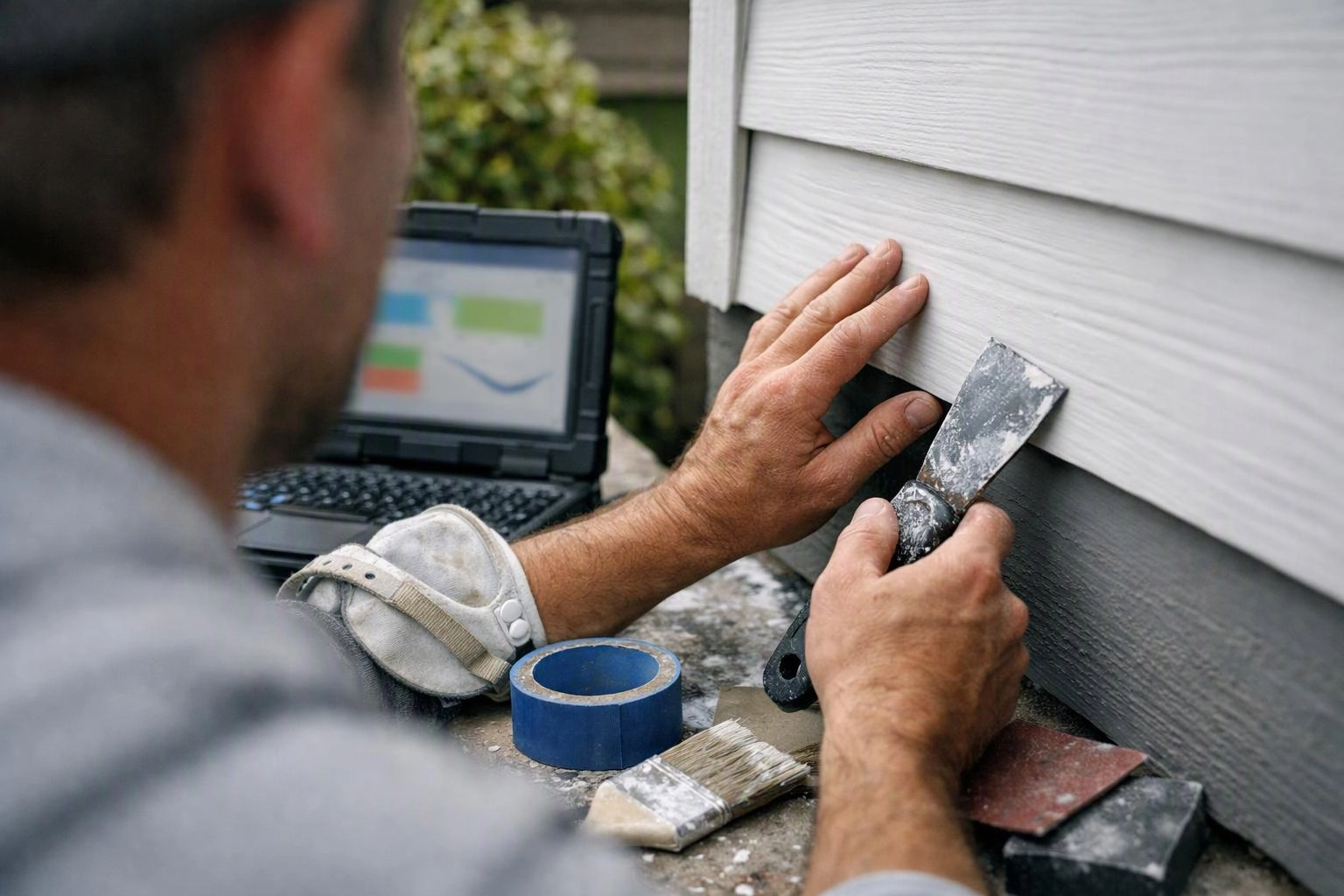
Our team records surface concerns as we work through each stage. That approach helps keep preparation, coating, and inspection connected.
How Do We Choose and Apply Siding Coatings?
We choose siding coatings based on the existing surface, condition, compatibility, color, and desired finish.
Primer helps prepare certain surfaces for the finish coat. We use it when the coating system, repairs, or surface condition call for additional bonding support.
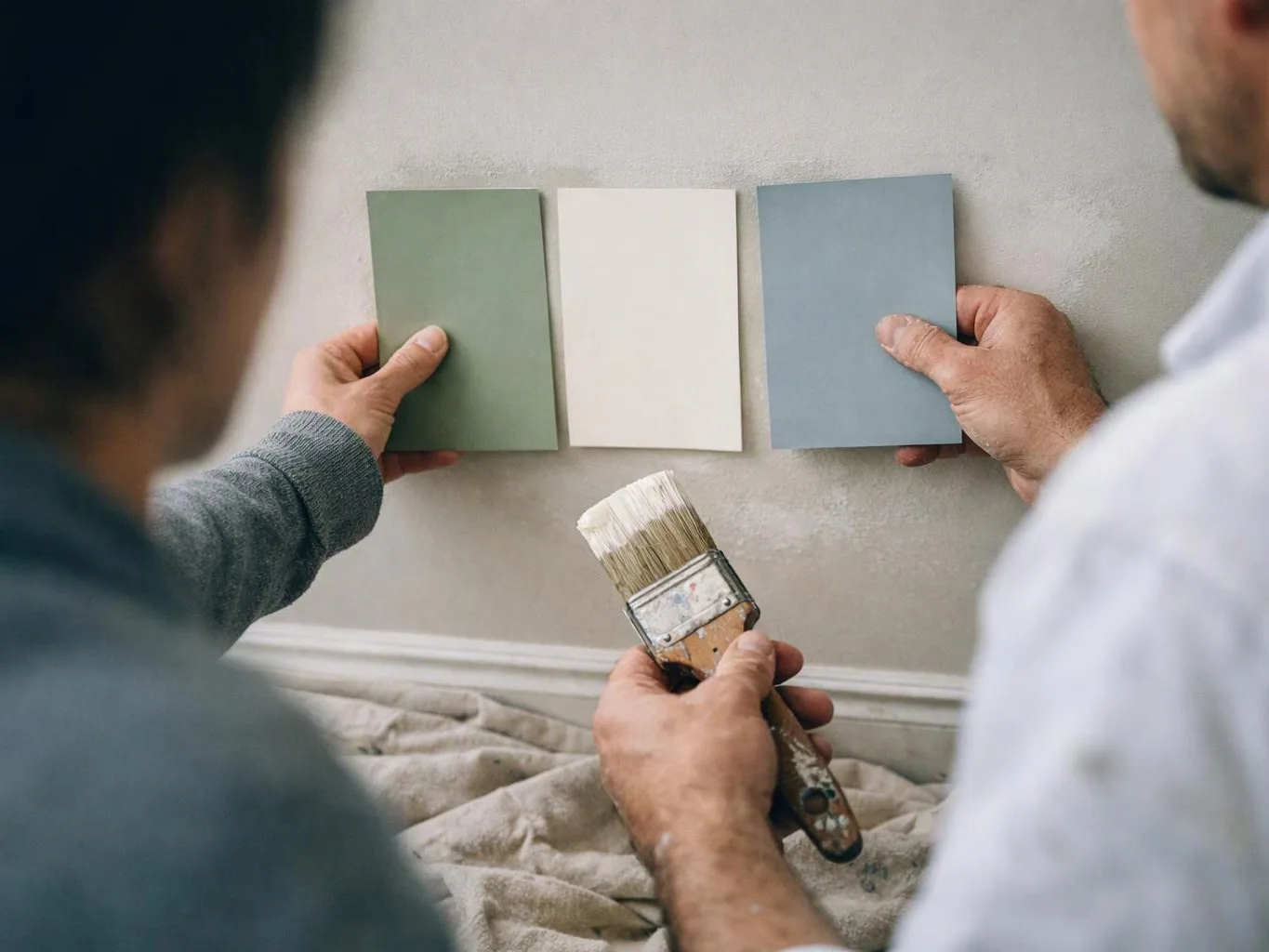
Our team checks paint compatibility before application. We also review sheen and color so the exterior paint supports an even appearance and reliable adhesion.
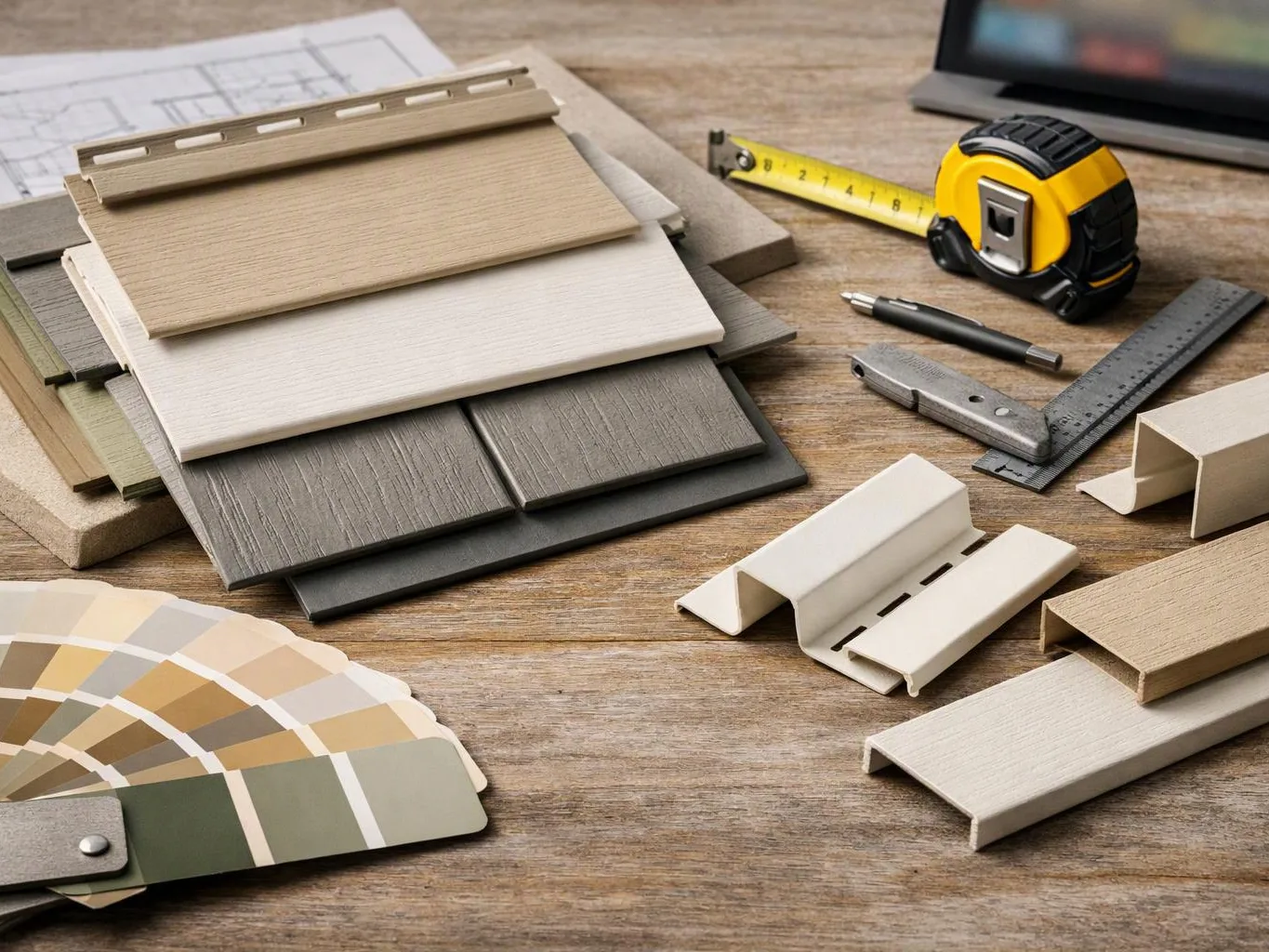
Wood siding painting, fiber cement siding painting, vinyl siding painting, brick painting, and stucco painting can require different coating choices. The siding material guides the application plan.
How Do We Check the Finished Siding?
The final inspection checks the finished siding for consistent coverage, clean edges, coating defects, overspray, and complete cleanup.
Our crew reviews trim lines, corners, fascia, soffits, and caulk joints. We look for missed areas, uneven color, drips, and visible surface problems.
Cleanup includes removing masking materials and collecting paint debris from the work area. We also check nearby windows, plants, walkways, and other protected surfaces.
What Changes the Cost of Siding Painting?
Siding material, surface repairs, access, coating choices, and project scope affect the cost, so we review those details before preparing a quote.
Surface condition can change the preparation work when peeling paint, moisture damage, or loose coating is present. A color change may also affect the coating plan and coverage needs.
We include the planned preparation, repair work, primer needs, finish coat, access requirements, and cleanup in our project review. You can request an exact quote after we assess the siding and scope.
How Can You Request an Exterior Siding Painting Estimate?
Free Estimates Available through our team include a review of the siding, preparation needs, coating plan, and project scope.
We use the assessment to explain needed repairs, primer requirements, finish coat choices, access concerns, and cleanup. Request an estimate through our contact page.
Questions About Exterior Siding Painting
Can exterior siding be painted over existing paint?
Yes, exterior siding can be painted over existing paint when the old coating is sound and compatible. We clean the surface and remove peeling or loose areas before applying new coatings.
Does siding need primer before exterior paint?
Primer is needed when the surface, repairs, or paint compatibility require extra preparation. We select the coating system after reviewing the siding condition.
What happens if siding has peeling or damaged areas?
Peeling or damaged siding is inspected before painting begins. We remove loose coating and identify repair needs so the new finish has a stable base.
How does the siding material affect the painting process?
Siding material affects cleaning, preparation, primer selection, paint compatibility, and application. We adjust the coating plan for wood, fiber cement, vinyl, brick, or stucco surfaces.
What should homeowners move before exterior siding painting?
Homeowners should move outdoor furniture, decorations, hoses, tools, and other loose items near the walls. Plants should be trimmed, and windows should be closed before work begins.