When Stucco Paint Failure Calls for More Than a New Coat
Stucco paint failure can show that the coating is losing adhesion or protection. Thomas J. Painting checks for soft, swollen, cracked, or hollow-sounding areas before recommending repainting.
Get a Free EstimateWhat Chalking and Peeling Say About Stucco Paint
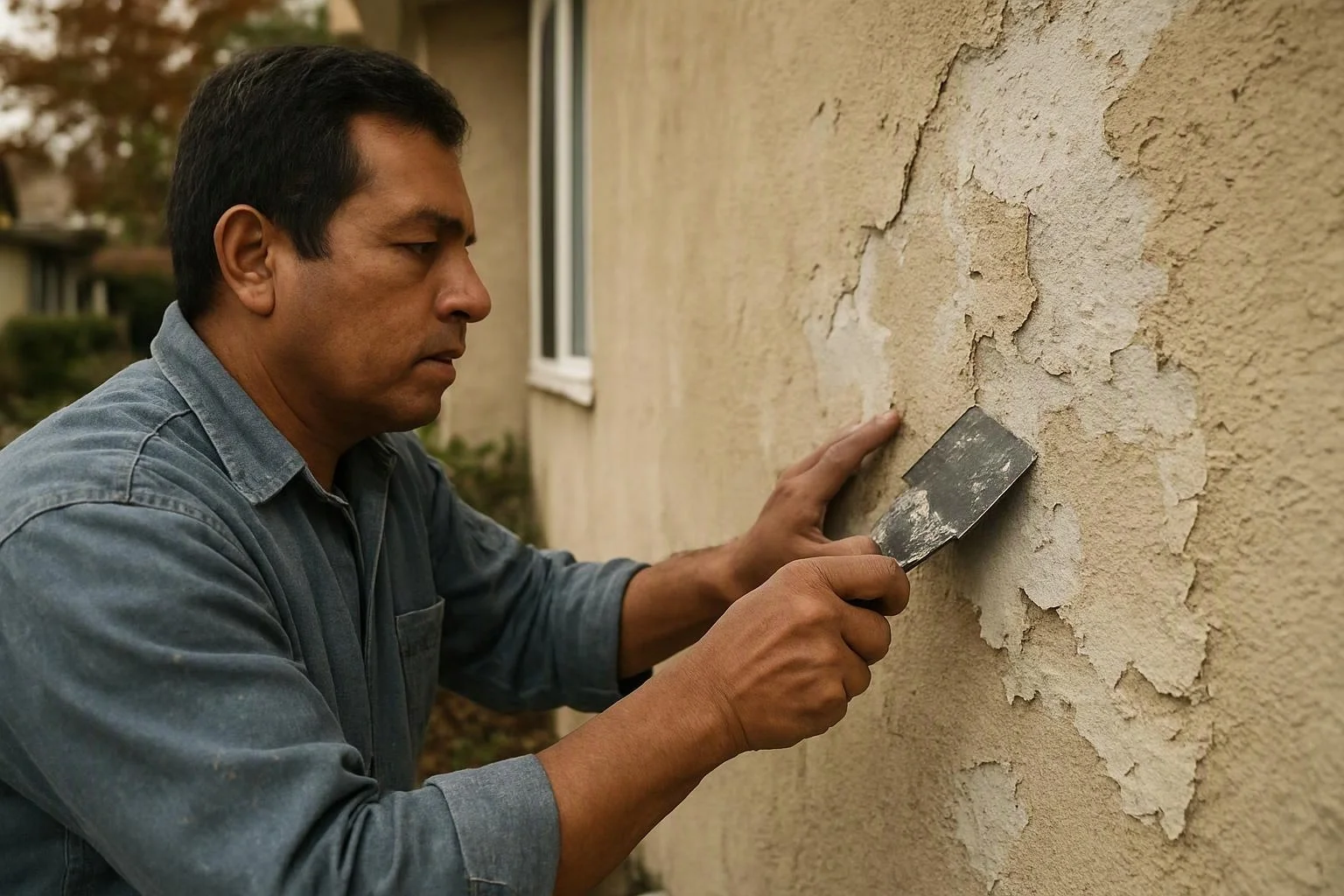
Chalking shows that the paint film is breaking down, while peeling shows that paint has lost adhesion to the stucco or coating below.
Chalking leaves a powdery residue on the wall surface. Some powder can come from weather exposure, but heavy residue can weaken the coating system and reduce weather protection.
Peeling paint points to a loss of adhesion. Poor surface preparation, trapped moisture, incompatible coatings, and surface deterioration can all contribute. We identify the likely cause before applying new exterior paint.
Signs Stucco Needs Repainting
Stucco usually needs repainting when chalking, peeling, fading, or exposed areas show that the coating no longer protects the surface.
Visible wear does not always mean the stucco coat has failed. We look at the paint film and the wall surface together before choosing stucco repainting or another approach.
We remove unstable material and prepare sound areas before stucco painting. That preparation helps the new coating bond to a clean, stable surface.
When Paint Failure Points to Stucco Damage
Soft stucco or hollow-sounding stucco can indicate weakened material, separation, or moisture damage that paint alone won't correct.
Water intrusion can weaken the stucco substrate behind the finish. Delamination occurs when layers separate, and moisture damage may continue below an intact-looking coating.
We check suspicious areas for changes in texture, sound, and stability. When the substrate has failed, we include stucco repair before repainting.
Recurring peeling near cracks, joints, windows, or roof edges deserves closer attention. These locations can point to moisture paths that surface cleaning cannot solve.
What Thomas J. Painting Checks Before Repainting
Stucco inspection checks the wall's condition, moisture signs, cracks, and paint adhesion before we select a repainting approach.
Our team reviews the surface for loose paint, powdering, bare stucco, and signs of water entry. We also assess whether the existing coating can support another coat.
Surface preparation may include cleaning, paint removal, crack repair, and spot treatment. We match each preparation step to the condition of the wall.
Our moisture assessment helps separate normal coating wear from possible water damage. Thomas J. Painting offers Free Consultations so we can discuss the findings and the next step.
For broader planning, our Stucco Painting service focuses on preparation, coating selection, and a clean exterior finish.
DIY Checks Compared With Calling Us
You can safely observe visible paint changes from the ground, while Thomas J. Painting handles detailed assessment, preparation, and painting work.
Do not climb a ladder to investigate doubtful areas if the position feels unsafe. Our crew can handle elevated inspection and surface work as part of the project assessment.
| Factor | What you can do yourself | What we do |
|---|---|---|
| Visible changes | Observe chalking, fading, peeling, and bare areas from the ground. | Review the pattern and condition of the coating across the wall. |
| Ladder safety | Avoid climbing when the surface, height, or footing feels unsafe. | Handle elevated areas with the equipment and care needed for the work. |
| Surface preparation | Note where paint appears loose or damaged. | Remove unstable coating, clean the surface, and prepare sound stucco. |
| Stucco repair | Record visible cracks or areas that look swollen. | Assess substrate damage and complete needed repair before painting. |
| Stucco painting | Avoid applying a new coat over peeling or unstable paint. | Choose and apply a coating system suited to the prepared surface. |
A ground-level check can help you describe the problem, but it cannot confirm substrate condition. We use the inspection findings to guide preparation and painting decisions.
How the Right Stucco Painting Approach Is Chosen
Repainting is suitable when the stucco remains sound, but damaged or unstable areas need correction before new coating is applied.
We remove peeling material and complete spot preparation where the coating has failed. Clean, stable areas may need primer before the finish coating.
A primer can help seal prepared areas and support paint adhesion. We select the primer based on the existing coating and the condition of the stucco.
An elastomeric coating may suit sound stucco that needs flexible weather protection. We use the coating system that matches the wall, repairs, and existing finish.
When the stucco itself is damaged, stucco repair comes before recoating. Painting cannot restore material that has softened, separated, or lost its bond.
What to Do After You Notice Chalking or Peeling
Paint failure assessment helps determine whether chalking or peeling needs cleaning, preparation, moisture correction, or stucco repair.
Start by observing the affected areas from a safe position. Note whether the problem follows cracks, openings, roof edges, or other moisture paths.
We look for moisture sources before building a repainting plan. Surface cleaning and paint removal only help when the underlying wall is stable.
Recurring peeling should not be treated as a simple color problem. Arrange a surface assessment before applying another coat through our stucco painting service.
Request a project review from Thomas J. Painting through our contact page.
Questions About Stucco Paint Failure
Can you paint over chalky stucco?
Thomas J. Painting can repaint chalky stucco after we remove loose residue and prepare the surface. Heavy chalking can prevent proper paint adhesion, so we assess the wall before choosing a coating.
Should peeling stucco paint be removed before repainting?
Yes, peeling stucco paint should be removed before repainting when the coating has lost adhesion. We remove unstable material, prepare the surface, and correct substrate problems before applying new paint.
What causes stucco paint to peel after repainting?
Stucco paint can peel after repainting when moisture, poor surface preparation, weak adhesion, or incompatible coatings remain unresolved. We inspect the failed area to identify the cause before planning another coating.
Can new paint hide soft or hollow-sounding stucco?
No, new paint cannot correct soft or hollow-sounding stucco. We assess the affected substrate and complete needed stucco repair before repainting.
Stucco paint failure can come from normal coating wear or deeper surface damage. Thomas J. Painting can assess the wall and recommend the right preparation, repair, or repainting plan.
Get a Free Estimate